
Water poppy
Hydrocleys nymphoides
Description
Growing requirements
Hydrocleys nymphoides, commonly known as Water poppy, is a perennial aquatic plant belonging to the Alismataceae family. It originates from tropical South America and has become a staple for ornamental pond gardening.
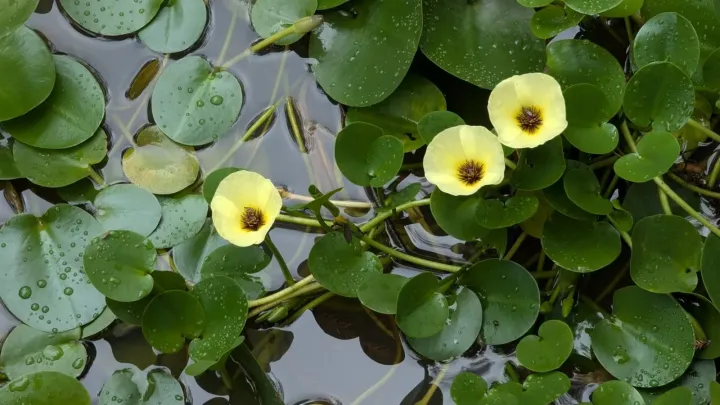
The plant features floating, glossy green leaves that resemble small water lilies and produces bright yellow, cup-shaped flowers. It propagates via creeping runners that allow it to colonize the surface area of a pond effectively.
Regarding climatic requirements, the species thrives in full sun exposure. It requires warm water temperatures, ideally between 20°C and 28°C. In regions with cold winters, the plant must be overwintered indoors to prevent frost damage.
The soil substrate should consist of heavy clay or aquatic loam. Since the plant is a heavy feeder, embedding specialized aquatic fertilizer tablets into the root zone every month during the active growing season is recommended.
Water depth plays a crucial role in the development of Hydrocleys nymphoides. It prefers shallow water, usually between 10 to 30 centimeters deep, allowing the root system to be firmly anchored in the bottom soil while the leaves float on the surface.
Main diseases and pests
Aphids are the most common pest observed on the foliage of the Water poppy. They congregate on the undersides of the leaves and stems, requiring physical removal or gentle washing with water.
Fungal diseases, such as crown rot, may occur if the water quality is poor or if there is excessive decomposing organic matter surrounding the plant's base.
Overcrowding is a significant threat to the health of the plant colony. Without thinning, the lack of air circulation and competition for nutrients can weaken individual specimens, making them susceptible to diseases.
Algal blooms can compete with Hydrocleys nymphoides for sunlight and nutrients, significantly hindering its growth rate and flower production in the pond environment.
Maintenance to minimize these threats involves regular monitoring of leaf health, prompt removal of debris from the water surface, and ensuring the pond water remains oxygenated.