
Hydnora triceps
Hydnora triceps
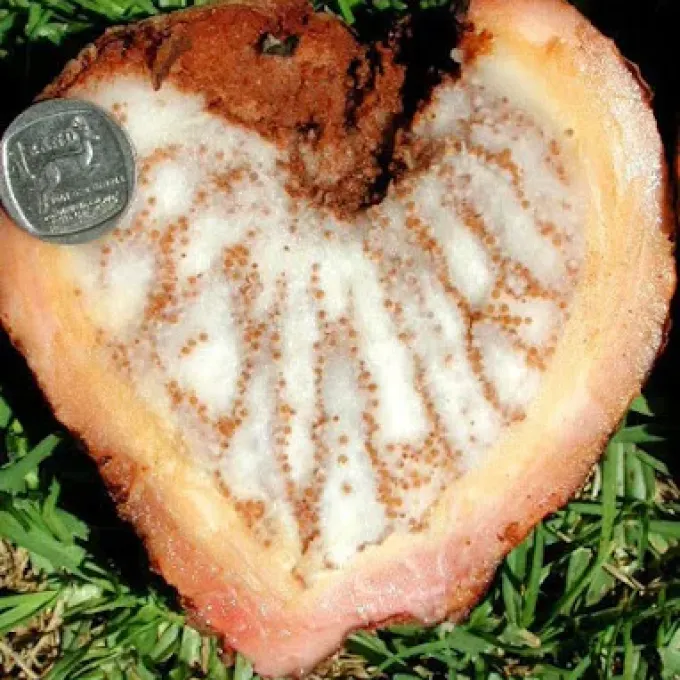
Description
Growing requirements
Hydnora triceps is a remarkable holoparasitic plant belonging to the Aristolochiaceae family. It is distinct for its complete lack of chlorophyll and leaves, meaning it cannot produce energy through photosynthesis.
The native habitat of this plant is restricted to the arid regions of the Northern Cape in South Africa. It thrives in desert environments where it parasitizes the root systems of specific succulent plants, mainly species of the Euphorbia genus.
Botanically, the plant consists primarily of fleshy, rhizome-like structures that grow entirely underground. These structures establish connections with the host plant to siphon off nutrients and water, which is a vital survival mechanism in harsh environments.
Regarding its ecological requirements, the plant necessitates stable arid soils and the constant presence of host species. It does not tolerate high humidity or waterlogged soils, as these conditions do not align with the biology of its desert hosts.
From an agricultural standpoint, Hydnora triceps is not a crop and cannot be cultivated using standard farming practices. Its existence is tied exclusively to the health of the host population, making it an ecological specialty rather than a commercial commodity.
Main diseases and pests
The plant is resilient against typical crop pests due to its underground nature and specific host-dependent lifestyle. It remains protected from most external environmental stressors as long as the host plant remains viable.
The primary threat is habitat fragmentation. The degradation of arid landscapes due to agricultural expansion or overgrazing reduces the availability of host plants, which directly endangers the survival of Hydnora triceps populations in the wild.