
Hydnora africana
Hydnora africana
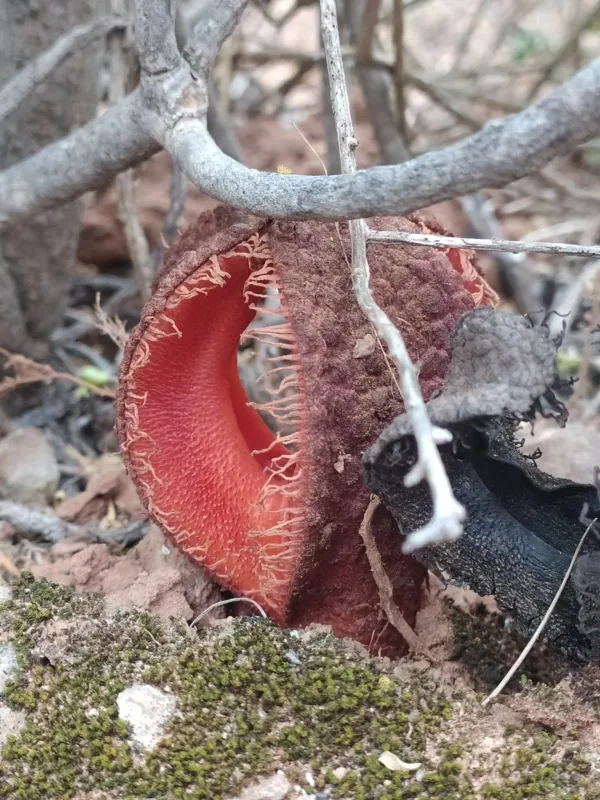
Description
Growing requirements
Hydnora africana is a root-parasitic plant within the family Aristolochiaceae. As a holoparasite, it lacks chlorophyll and relies entirely on host plants, typically species of the genus Euphorbia, for nutrients and water.
The plant originates from the arid regions of Southern Africa, including South Africa and Namibia. It thrives in desert environments where host roots are accessible within the sandy, nutrient-poor soil substrate.
Morphologically, the plant consists primarily of a fleshy underground stem structure. The only visible parts are the uniquely shaped flowers that emerge from the soil to attract dung beetles and carrion flies for pollination.
Strict environmental requirements include extremely arid soil conditions and the presence of a viable host root system. Any deviation from the natural soil moisture levels usually leads to rapid decay of the plant's succulent tissues.
Although it is not a cultivated agricultural crop, it remains a subject of intense botanical interest due to its evolutionary adaptation to extreme environmental conditions and parasitic lifestyle.
Main diseases and pests
The primary threats to Hydnora africana populations include the decline of host plants and significant habitat disturbance. Without a host, the parasite cannot establish its root connection and dies shortly after germination.
Fungal pathogens and root rot are the main threats if soil moisture becomes too high. The succulent nature of the plant makes it highly susceptible to tissue degradation under wet conditions.
Local fauna can sometimes graze on the exposed flowers and fruit. However, this is usually part of the ecological cycle and serves to spread seeds across the arid landscapes.
No agricultural pest control or disease management programs exist for this species, as it has no commercial value in standard farming practices. Research is focused mainly on conservation in natural habitats.
Extreme temperature fluctuations and over-collection by enthusiasts represent additional risks to the stability of wild populations in specific regions of South Africa.