
Hovea elliptica
Hovea elliptica
Description
Growing requirements
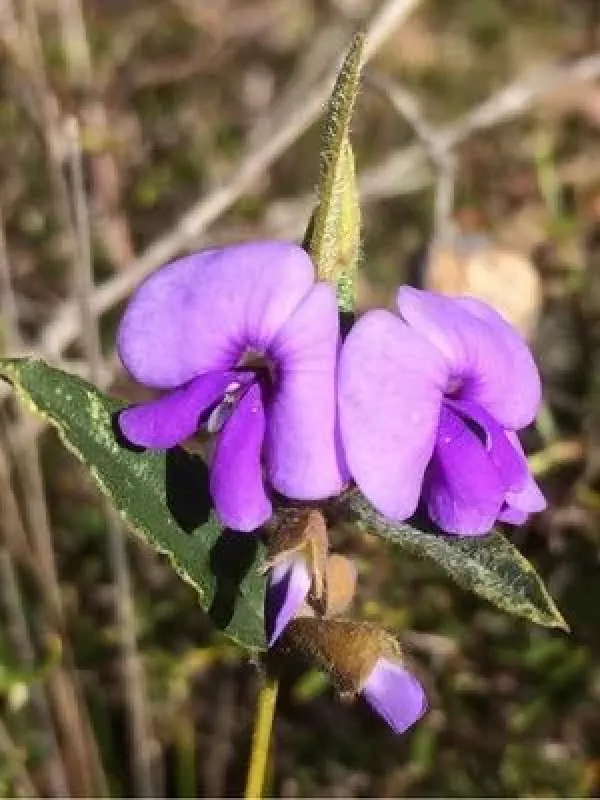
Hovea elliptica is a distinctive evergreen shrub belonging to the Fabaceae family. Originating from the southwestern regions of Western Australia, it is celebrated for its deep blue to violet flowers that bloom in early spring.
The plant thrives in well-drained sandy or rocky soils, which is essential to prevent root rot. It is adapted to Mediterranean-style climates and requires excellent soil aeration to remain healthy and vibrant.
Exposure to full sun or partial shade is necessary for optimal flowering. While it possesses some drought tolerance once established, it requires consistent moisture during its active growth phases to produce a profusion of blooms.
Soil chemistry is important for this species; it prefers low-phosphorus conditions, which is typical for many native Australian plants. Fertilizers specifically formulated for Australian natives are recommended if nutrient supplementation is needed.
In landscaping, Hovea elliptica serves as a stunning feature plant. Its ability to tolerate mild frost and its compact growth habit make it a popular choice for rock gardens and sheltered courtyard environments.
Main diseases and pests
The primary threats to Hovea elliptica are fungal diseases associated with poor drainage and high humidity. Excessive moisture around the root zone often leads to fatal crown and root rots.
Pests such as scale insects or spider mites may affect the plant, particularly when grown in sheltered, low-ventilation areas like greenhouses. Regular inspections are advised to manage potential infestations early.
Foliage diseases, including powdery mildew, can occur if the plant is grown in dense, unventilated settings. Providing adequate spacing between plants is a crucial cultural practice to prevent these issues.
Effective management includes maintaining rigorous sanitation in the growing area. Removing fallen leaf litter and pruning dead or diseased wood helps keep the fungal spore count low.
While the plant is relatively hardy, monitoring for signs of wilt is essential. If fungal symptoms appear, the application of appropriate systemic fungicides may be required to prevent further spread.