
Hormathophylla saxigena
Hormathophylla saxigena
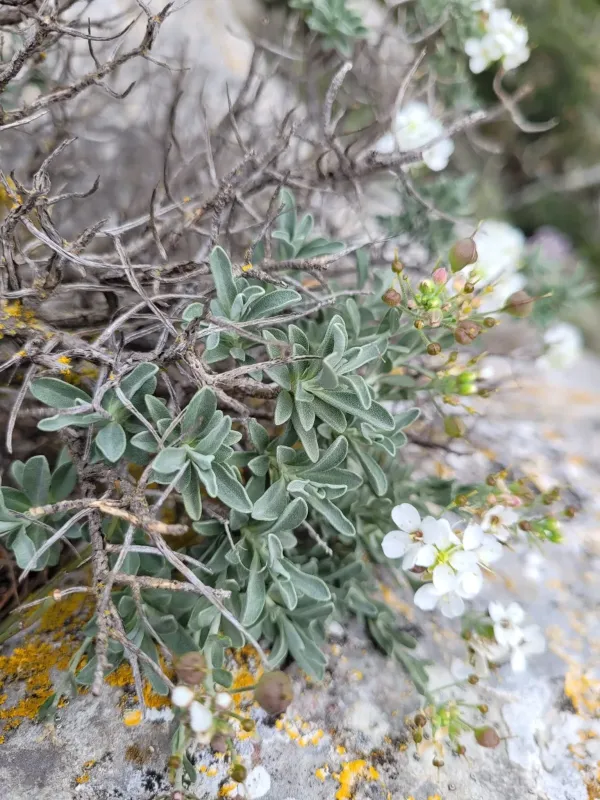
Description
Growing requirements
Hormathophylla saxigena is a specialized plant species belonging to the Brassicaceae (mustard) family. Its natural habitat includes the rocky mountainous terrains of the Mediterranean region, where it has evolved to thrive in harsh, nutrient-poor environments.
Botanically, it is classified as a low-growing perennial shrub. The plant exhibits xerophytic characteristics, such as reduced leaf size and deep-reaching root systems, which allow it to anchor securely in rock crevices and absorb moisture efficiently.
The primary soil requirement is excellent drainage. This plant cannot tolerate heavy clay or waterlogged soils, which lead to root rot. A substrate composed primarily of grit, sand, and minimal organic matter is ideal for maintaining the plant’s natural physiological balance.
Environmental conditions must mimic the plant’s native alpine climate: high solar exposure and significant temperature fluctuations between day and night. It is exceptionally drought-tolerant and requires almost no supplemental irrigation once the root system is established.
Cultivation practices should be minimal. Fertilizer use should be avoided as it promotes rapid, succulent growth that is susceptible to winter damage. The goal of cultivation is to maintain the plant's characteristic compact, cushion-like habit through limited nutrition and high light exposure.
Main diseases and pests
The most significant threat to Hormathophylla saxigena is excessive winter moisture. If the soil remains saturated while temperatures drop, the roots and crown of the plant are highly vulnerable to lethal rot.
While relatively pest-resistant, the plant can occasionally suffer from aphids during the spring flush. These pests are usually managed through natural predators, as chemical intervention can be damaging to the plant's delicate structure.
Competition from more aggressive, fast-growing weeds is a common threat in garden settings. Regular manual weeding is necessary to ensure the plant receives sufficient light and remains free from the suffocating effects of encroaching vegetation.
Poor air circulation, often caused by overcrowding or planting in sheltered areas, can promote fungal issues. Ensuring that plants have enough space and are placed in open, breezy locations is the best defense against pathogens.
Mechanical damage during maintenance is also a concern. Due to its slow growth rate, broken stems do not recover quickly; therefore, all weeding and surrounding site management must be performed with great care to avoid disturbing the root zone.