
Holocalyx glaziovii
Holocalyx glaziovii
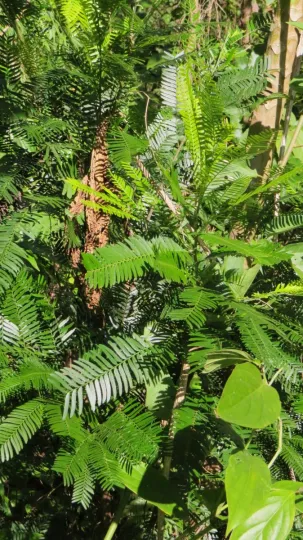
Description
Sowing dates
The propagation of Holocalyx glaziovii is primarily achieved through seeds, which require careful handling due to their hard seed coat. Scarification techniques are essential to enhance germination rates.
Sowing in nurseries should coincide with the beginning of the rainy season to ensure that seedlings receive the necessary moisture for early stage development.
Optimal germination occurs at temperatures between 25 and 30 degrees Celsius. Consistent warmth is critical for achieving uniform and vigorous seedling emergence in a nursery environment.
Seedlings require partial shading during the initial months to protect them from excessive solar radiation, which can dehydrate young leaves and hinder growth.
Transplanting to permanent sites should be conducted when the plants reach a height of at least 30-50 cm, ensuring they are placed at a spacing that allows for future crown development.
Growing requirements
Holocalyx glaziovii belongs to the Fabaceae (legume) family and thrives in deep, fertile soils. Well-drained loams with a neutral to slightly acidic pH are ideal for its successful establishment.
As a tropical species, it requires stable environmental conditions and is highly sensitive to extreme frost or sharp fluctuations in day and night temperatures.
The tree demands plenty of sunlight to grow effectively. It is best suited for open planting areas where it can receive maximum exposure without competition for light from taller canopy layers.
While the tree shows some tolerance to temporary dry spells once established, consistent moisture availability is vital during the growing season to ensure robust stem formation.
Maintenance practices such as regular weeding in the root zone are necessary, as competition from invasive grasses can severely restrict nutrient uptake and growth speed in young specimens.
Yield
The economic potential of Holocalyx glaziovii is largely based on its high-quality timber. The wood is recognized for its density, durability, and resilience, making it a sought-after material for specialized construction.
Yield metrics for this species focus on wood volume production over time. While its growth rate is moderate, the long-term value of the harvested timber makes it a viable choice for silvicultural investments.
Beyond timber production, the species contributes to agroforestry systems by improving soil health, a common trait among nitrogen-fixing legumes that can benefit adjacent crops.
The total biomass yield is directly influenced by planting density and the quality of the soil management program, including the strategic use of organic fertilizers during the establishment phase.
Sustainable harvesting strategies ensure that these timber plantations remain productive over multiple decades, providing a steady supply of high-grade wood for interior and construction uses.
Main diseases and pests
The most common threat to this species is fungal root rot, which typically develops in poorly drained soils or areas prone to waterlogging after heavy rainfall.
Pests such as wood-boring insects and leaf-eating beetles can significantly damage the structural integrity and photosynthetic capacity of the trees, especially in young, vulnerable stands.
Competitive flora, particularly fast-growing vines or invasive grasses, can choke seedlings and compete for light and resources, necessitating consistent monitoring and manual removal.
Wildfire risk is a major concern in tropical plantations during the dry season, requiring the establishment of firebreaks and strict surveillance to protect the growing trees from destruction.
Effective pest and disease control involves early detection and the use of integrated management strategies, which help preserve the long-term health and vitality of the plantation.