
Common mare's tail
Hippuris vulgaris
Description
Growing requirements
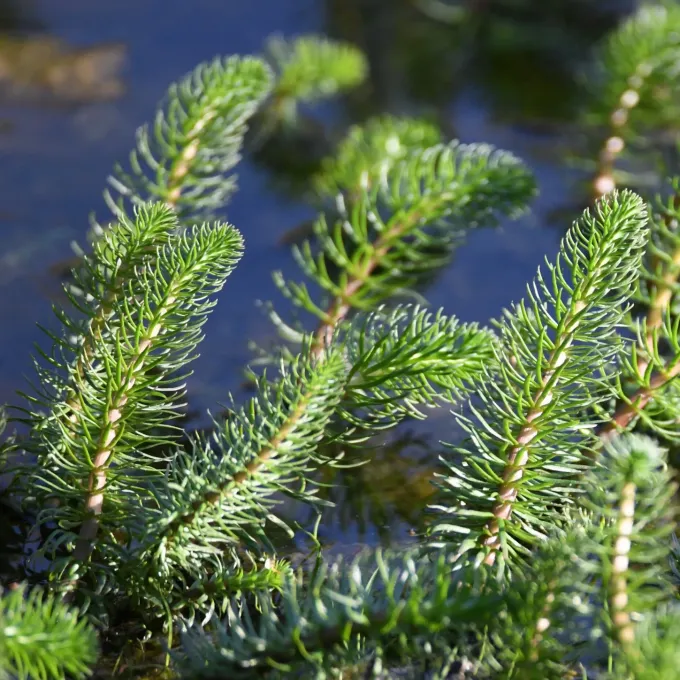
Common mare's tail (Hippuris vulgaris) is a perennial herbaceous aquatic plant belonging to the Plantaginaceae family. It is distinct for its whorled leaves and erect stems that emerge from submerged rhizomes rooted in the pond bed.
The plant is native to a wide range of temperate regions across the Northern Hemisphere. It typically inhabits shallow freshwater environments, including ponds, slow-moving streams, and marshy areas where the water depth is consistent.
Regarding soil requirements, the plant thrives in muddy or silty bottoms rich in organic matter. While it can adapt to various water types, it prefers nutrient-rich substrates that support its rapid growth during the summer season.
Climate needs are relatively modest, as the plant is hardy and adapted to cold winters in northern latitudes. However, it requires a stable water level, as drought or dry conditions can quickly lead to the desiccation of its root system.
In terms of agricultural and horticultural use, it is highly valued for its ability to oxygenate water and act as a biological filter. It absorbs excess nitrogen and phosphorus, making it an excellent choice for ornamental ponds and natural water treatment systems.
Main diseases and pests
Common mare's tail is susceptible to fungal infections in poorly ventilated water environments. Stagnant water often promotes the growth of pathogens that can lead to stem decay, especially if the plant density is too high.
Pests, such as aphids or certain species of aquatic beetles, may feed on the emergent stems, causing structural damage. While usually not lethal in small numbers, severe infestations can significantly reduce the vitality of the plant.
Competition from aggressive invasive aquatic species often threatens the survival of Hippuris vulgaris. Fast-growing plants like cattails or invasive reeds can overshadow and outcompete the mare's tail for sunlight and nutrients.
Water quality degradation, including chemical pollution from agricultural runoff, poses a severe risk. High concentrations of herbicides or pollutants can interfere with the plant's metabolic processes, leading to yellowing and plant death.
To ensure healthy growth, regular maintenance is recommended. This includes thinning out overly dense patches, removing debris from the bottom of the water body, and monitoring for early signs of disease or pest colonization.