
Hexalobus monopetalus
Hexalobus monopetalus
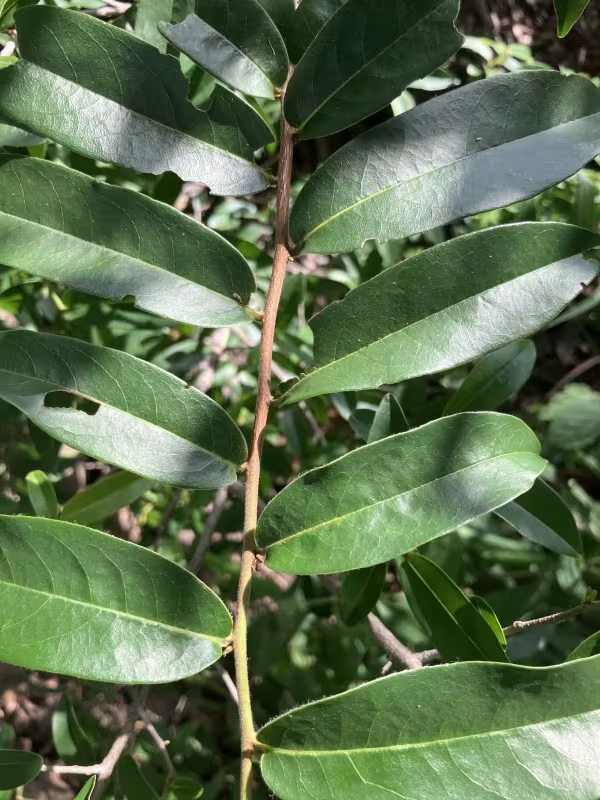
Description
Sowing dates
Propagation of Hexalobus monopetalus is primarily achieved through seeds, which should be sown immediately after harvesting for optimal germination rates.
The seeds are recalcitrant and tend to lose viability quickly, requiring a moist medium and warm conditions to sprout effectively.
Sowing in a nutrient-rich, well-draining potting mix is recommended to support the initial development of the young saplings.
Germination typically occurs within a few weeks under stable temperatures ranging from 25 to 30 degrees Celsius.
Seedlings need to be kept under partial shade during their first months to prevent transplant shock and leaf scorch.
Growing requirements
Hexalobus monopetalus belongs to the Annonaceae family and is native to the tropical and subtropical regions of Africa.
The plant thrives in well-drained soils, often found in savannah woodlands and near riverine habitats where moisture is consistent.
Climate requirements include a frost-free environment with high ambient temperatures throughout the year for continuous growth.
It prefers sunny to semi-shaded positions and can adapt to a variety of soil types provided they are not waterlogged.
Regular irrigation is essential during the establishment phase, especially in regions with prolonged dry seasons.
Yield
The fruits of Hexalobus monopetalus are edible and are valued for their sweet pulp, serving as a seasonal food source.
The timber obtained from this tree is known for its durability, making it suitable for local construction and tool handles.
Medicinal applications of the bark and leaves are documented in ethnobotanical studies, reflecting the tree's versatility.
Yields vary significantly based on environmental conditions and the maturity of the tree, which can take several years to fruit.
- Fruit harvesting is done by hand.
- Wood processing involves traditional drying methods.
- Leaves are often air-dried for traditional extracts.
Main diseases and pests
The species is generally robust, but excessive humidity in seedling nurseries can lead to fungal infections and root rot.
Leaf-eating insects and caterpillars are the primary pests that may affect the foliage density and overall tree health.
Overgrazing by local fauna represents a physical threat to young trees in wild habitats, preventing natural regeneration.
Poor soil aeration can impede root development, making the tree more susceptible to secondary environmental stresses.
Habitat loss due to land conversion remains the most significant threat to the long-term conservation of the species.