
Hevea guyanensis
Hevea guyanensis
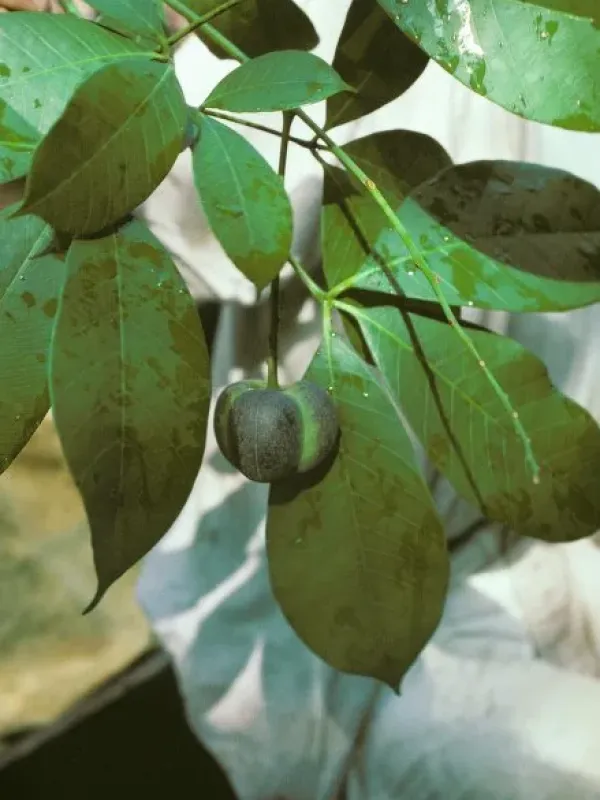
Description
Sowing dates
Sowing seeds of Hevea guyanensis is carried out in specialized nurseries using a prepared substrate rich in organic matter. The seeds of this plant have low longevity, so they must be sown within the first few days after collection, maintaining high humidity and a stable temperature of about 28-30 degrees Celsius.
Germination requires shading, as direct sunlight can negatively affect the development of young seedlings. As the root system forms and the first true leaves appear, the seedlings undergo a gradual acclimation process to open-field conditions.
Transplanting young plants to their permanent site is done at the beginning of the rainy season, ensuring optimal survival rates. The planting pattern is chosen to provide sufficient space for canopy development, which can reach significant dimensions in mature specimens.
Quality planting material undergoes selection for pathogen resistance and growth intensity. A crucial step is the preparation of planting pits with the application of balanced mineral fertilizers, which stimulate root system development in the early growth stage.
Young trees require regular maintenance during the first three years, including weeding around the trunk and soil moisture monitoring. With proper agronomic practices, the plants quickly gain vegetative mass, shortening the period before they are ready for latex harvesting.
Growing requirements
Hevea guyanensis belongs to the Euphorbiaceae family and is a typical tropical crop requiring high rainfall levels throughout the year. For successful cultivation, it is necessary to maintain a year-round temperature between 25-32 degrees Celsius without significant diurnal fluctuations.
Soils for this crop must have good aeration and drainage, as water stagnation is detrimental to the plant's roots. Deep alluvial or red soils with a slightly acidic reaction are preferred for optimal development.
The crop is extremely sensitive to strong winds; therefore, choosing a site with natural protection or creating windbreaks is essential. The intensity of solar radiation must be high, although partial shade is required during the early growth stage to prevent leaf overheating.
Mineral nutrition should be balanced in nitrogen, phosphorus, and potassium, as this directly affects the regeneration rate of laticiferous vessels in the tree bark. During dry periods, supplementary irrigation may be necessary to maintain metabolic processes.
The plant has a specific biological leaf-shedding cycle that coincides with seasonal changes in the tropics. An agronomist must account for this rhythm when planning fertilizer application and pest control measures.
Yield
The primary product of the economic use of Hevea guyanensis is latex, obtained by tapping the trunk bark. Commercial exploitation begins when the tree reaches a specific stem diameter, which typically happens 6-8 years after planting.
Latex yield depends directly on the genetic characteristics of the clone, the age of the tree, and the skill of the worker performing the tapping. Optimal tapping intensity allows for stable raw material output without significantly depleting the plant's metabolism.
The physiological state of the laticifers—specialized cells containing the rubber emulsion—is considered during production. Proper distribution of rest periods for the tree extends its productive life to 25-30 years.
Latex collection occurs in the early morning hours when plant metabolism is most active and pressure in the laticifers facilitates rapid emulsion flow. The use of specialized bark knives ensures minimal damage to the cambium, which is vital for quick bark recovery after the operation.
The secondary product is timber, which is used in furniture production after the period of economic exploitation of the plantation concludes. Thus, Hevea guyanensis is a multipurpose crop with high added value.
Main diseases and pests
Among the main diseases of Hevea are fungal infections of the bark and leaves, caused by excessive humidity and poor canopy ventilation. One of the most dangerous pathogens is South American Leaf Blight, capable of destroying a significant portion of the foliage.
Insect pests, such as mites and various beetle species, can damage shoots and weaken young trees. Regular monitoring of plantation health allows for the timely identification of infection foci and the application of biological or chemical control agents.
Root rots pose a serious threat to adult trees, especially in areas with poor drainage. Prevention consists of maintaining soil hygiene and choosing correct predecessors when establishing a new plantation.
Infection of trunks by parasitic plants or epiphytes also requires the agronomist's attention, as they compete for sunlight and nutrients. Trunk cleaning is performed as part of planned sanitary measures.
Modern integrated pest management methods allow for minimizing crop losses while adhering to environmental standards. An important factor is the use of Hevea varieties resistant to local strains of diseases.
Harvesting
Latex harvesting is a continuous process distributed by season. Tapping is carried out every other day or with a lower frequency to give the bark time to heal and regenerate the laticiferous vessels.
Collected latex is transported to primary processing centers for coagulation and subsequent drying. The quality of the finished rubber depends on the collection speed and the prevention of premature emulsion coagulation in collection vessels.
During the harvest, workers use special channels through which the latex flows into cups fixed to the trunk. Maintaining instrument cleanliness is an essential aspect to prevent bacterial contamination of the raw material.
After collection, tools are disinfected to avoid transmitting infections between trees. During periods of heavy rain, harvesting may be suspended due to the risk of latex washing away and the decrease in the dry matter concentration of the raw material.
Planning the tapping schedules is managed at the plantation level, allowing for the optimization of logistics and primary processing. The efficiency of the process is measured by the rubber yield per hectare per year.