
Heterocentron elegans
Heterocentron elegans (Schltdl.) Kuntze
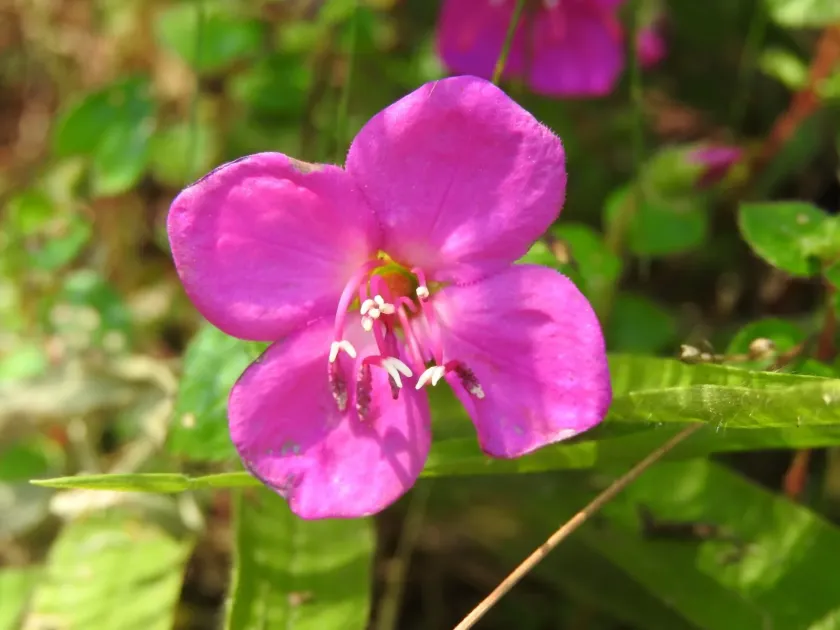
Description
Sowing dates
Propagation of Heterocentron elegans is most effectively achieved through stem cuttings or division of established clumps during the spring months. The ideal period for initiating active growth is late March or early April, coinciding with the lengthening of daylight hours.
Seed propagation is less common due to the high sensitivity of seeds to environmental conditions like stable temperatures and precise moisture levels. Sowing should be done in a light peat-based mix with added sand, ensuring constant bottom moisture and temperatures around 22–24 degrees Celsius.
Seedlings require transplanting into individual containers once they develop two or three sets of true leaves. It is essential to provide diffused lighting to young plants, as direct sun exposure can severely damage delicate foliage.
Annual repotting is recommended in early spring before the plant enters its peak flowering phase. Using appropriately sized pots with a thick drainage layer at the bottom is crucial to prevent long-term root health issues.
The application of rooting hormones when taking cuttings significantly increases success rates and speed of establishment. Cuttings should be placed in moist media and covered with clear plastic to maintain the high humidity levels necessary for root development.
Growing requirements
Heterocentron elegans, a member of the Melastomataceae family, is a tropical perennial that demands high ambient humidity. The optimal temperature range for development is between 18 and 25 degrees Celsius, and the plant is highly sensitive to thermal shocks.
The plant prefers fertile, well-drained soil with a neutral or slightly acidic pH. Avoiding waterlogging in the root zone is critical, which is why a drainage layer of clay pebbles or gravel at least 3–5 cm deep must be provided at the time of planting.
Bright, filtered light is essential, as the plant thrives best in partial shade. Direct midday sunlight is harmful and will cause the foliage to lose its vibrant color and eventually scorch.
Consistent watering is the foundation of healthy plant growth: the soil must remain uniformly moist but never waterlogged. During the dormant winter season, water intake should be reduced, though the root ball must never be allowed to dry out completely.
Fertilization should be carried out during the active growing season using a balanced fertilizer for flowering plants every two weeks. Excessive nitrogen should be avoided, as it promotes excessive vegetative growth at the expense of bloom production.
Main diseases and pests
Spider mites and mealybugs are the primary pests that affect Heterocentron elegans, particularly in environments with low air humidity. Regular misting of the foliage is a highly effective preventative measure against these insects.
If an infestation is detected, treatment with systemic insecticides or acaricides should be performed immediately according to the product guidelines. It is vital to ensure thorough coverage of both leaf surfaces to eliminate hidden populations.
Fungal diseases, such as root rot, typically occur due to persistent overwatering or poor soil aeration. If signs of rot appear, treatment involves using broad-spectrum fungicides and ensuring the substrate is allowed to dry out appropriately.
Leaf curling or yellowing may indicate an imbalance in mineral nutrients or improper soil acidity levels. Annual top-dressing or partial soil replacement helps maintain the plant's health and vigor.
- Maintenance of proper drainage conditions.
- Consistent monitoring for early signs of pests.
- Regular removal of withered or diseased plant matter.
- Adjustment of watering frequency based on light and season.