
Heterocaryum subsessile
Heterocaryum subsessile
Description
Growing requirements
Heterocaryum subsessile is an annual herbaceous plant belonging to the Boraginaceae family. It is native to arid and semi-arid regions of Central Asia, where it has evolved to thrive in harsh, water-limited environments.
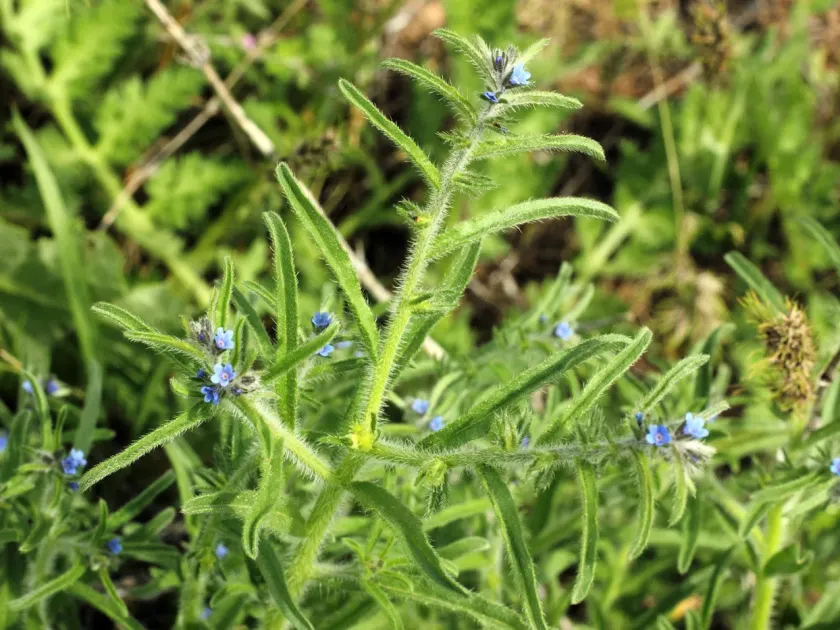
The plant is morphologically characterized by a stiff, hairy stem and narrow, alternate leaves. This pubescence acts as a thermal buffer and reduces transpiration rates under the intense solar radiation typical of its natural habitat.
The most distinctive feature of Heterocaryum subsessile is its inflorescence structure, where flowers lack distinct pedicels and appear seated directly on the stem. This specific adaptation allows the plant to conserve energy during the reproductive phase.
Regarding soil requirements, the species favors well-drained, sandy or loamy soils with a slightly alkaline pH. It is highly intolerant of waterlogging, which can cause rapid root decay and mortality during the early seedling stages.
Successful cultivation requires high exposure to sunlight and minimal competition from other vegetation. The plant is remarkably resilient to extreme temperature fluctuations between day and night, reflecting its evolutionary roots in desert-like ecosystems.