
Hertia cheirifolia
Hertia cheirifolia
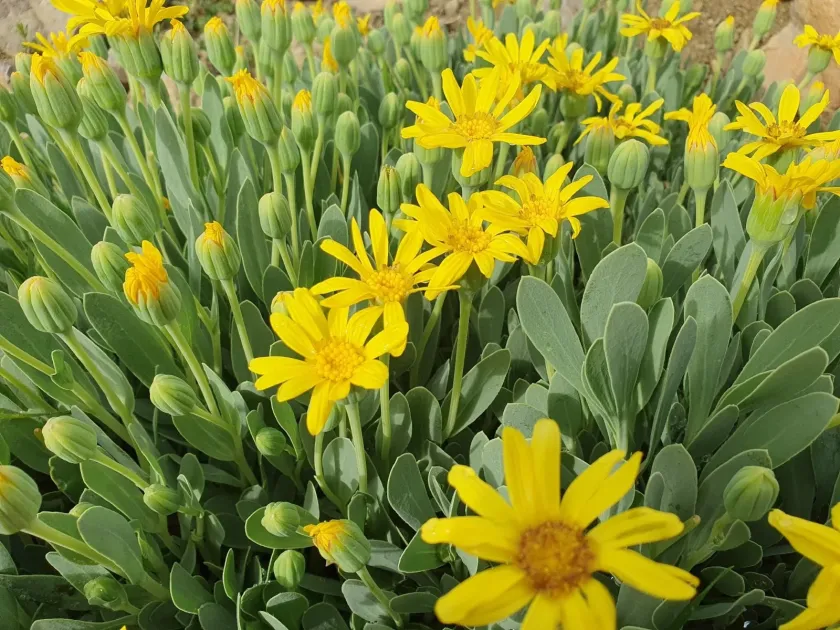
Description
Sowing dates
Hertia cheirifolia is a perennial semi-shrub belonging to the Asteraceae family, originating from arid Mediterranean landscapes. Propagation is typically achieved through seeds, which should be sown in early spring once the threat of frost has passed and soil temperatures stabilize.
Seeds are sown at a shallow depth of approximately 1 to 2 centimeters to ensure adequate light exposure, which is beneficial for germination. Proper seed-to-soil contact is essential for uniform emergence, requiring a light pressing of the soil surface.
Field spacing is a critical factor in agricultural management. Because this species tends to develop a spreading habit, a plant density of approximately 50 centimeters between rows is recommended to minimize competition for moisture and soil nutrients.
In large-scale operations, mechanized precision sowing is preferred to maintain consistent depth and spacing. Following sowing, the area should be kept free of weeds, as the young seedlings are slow to establish and can easily be outcompeted during the first growth stage.
Germination typically occurs within two to three weeks under favorable conditions. Consistent but minimal irrigation during the early phases of development is necessary until the root systems become sufficiently established to handle arid conditions.
Growing requirements
As a true xerophyte, Hertia cheirifolia is perfectly adapted to desert and semi-desert environments. It thrives in regions characterized by high solar radiation and extended periods of drought, making it an excellent candidate for arid-land agriculture.
The plant demonstrates a strong preference for well-draining, sandy, or rocky soils. It is notably sensitive to waterlogging, as stagnant water in the root zone quickly triggers fungal decay and leads to plant mortality.
Hertia cheirifolia shows remarkable tolerance to soil salinity, allowing it to grow in areas where most conventional agricultural crops would fail. This property makes it valuable for the restoration and utilization of degraded, saline soils.
The ideal climate for this species includes hot, dry summers and mild winters. While the plant may exhibit dormancy during peak heat or cold, it is highly resilient and recovers quickly once favorable growth conditions return.
Fertilization requirements are generally low, as the plant is adapted to nutrient-poor soils. Excessive nitrogen application should be avoided, as it may result in succulent growth that is more susceptible to damage from pests and adverse weather conditions.
Main diseases and pests
The primary threat to the health of Hertia cheirifolia is excessive soil and air moisture. High humidity levels, particularly during summer months, create favorable environments for root rot pathogens such as Phytophthora.
Pests such as aphids and spider mites can become problematic, particularly when the plant is stressed by extreme heat or poor environmental management. These pests often congregate on tender new growth, causing leaf curling and reduced photosynthesis.
Powdery mildew can occur in dense plantings with poor airflow. Maintaining proper spacing and removing debris from around the base of the plants are effective cultural practices for preventing the spread of these pathogens.
When chemical intervention is required, it must be performed with caution. Using integrated pest management (IPM) strategies is highly recommended, prioritizing biological controls and natural predators over broad-spectrum synthetic pesticides.
Regular field scouting is essential to identify early signs of infestation or disease. Swift removal of infected plant tissue can prevent local outbreaks from developing into systemic issues, ensuring the long-term viability of the crop.