
Helixanthera ligustrina
Helixanthera ligustrina
Description
Growing requirements
Helixanthera ligustrina is a perennial hemiparasitic shrub belonging to the Loranthaceae family. This species functions as an obligate parasite, utilizing specialized structures known as haustoria to penetrate the bark and vascular tissue of host trees to extract essential water and mineral nutrients.
The native range of this species is located within the tropical and subtropical regions of Asia. It thrives primarily in forested habitats where diverse tree species are available to serve as hosts, allowing the parasite to establish its population on various woody branches.
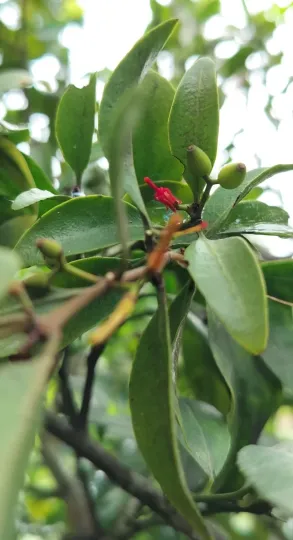
Botanically, the plant is recognized by its leathery, oval-shaped leaves which bear a striking resemblance to privet (Ligustrum) foliage, justifying its specific epithet. It produces distinct raceme inflorescences that emerge from leaf axils, contributing to its unique reproductive strategy.
Regarding environmental requirements, the plant demands high levels of atmospheric humidity and stable thermal conditions. It is specifically adapted to environments where sunlight is sufficient to support its photosynthetic activities, as it maintains some degree of chlorophyll production despite its parasitic nature.
In terms of ecological and agricultural impact, Helixanthera ligustrina is often managed as a pest in forest stands. By diverting resources from the host tree, it can cause severe stress, branch dieback, or reduced growth rates in commercially valuable or ecologically significant tree species.