
Helanthium tenellum
Helanthium tenellum
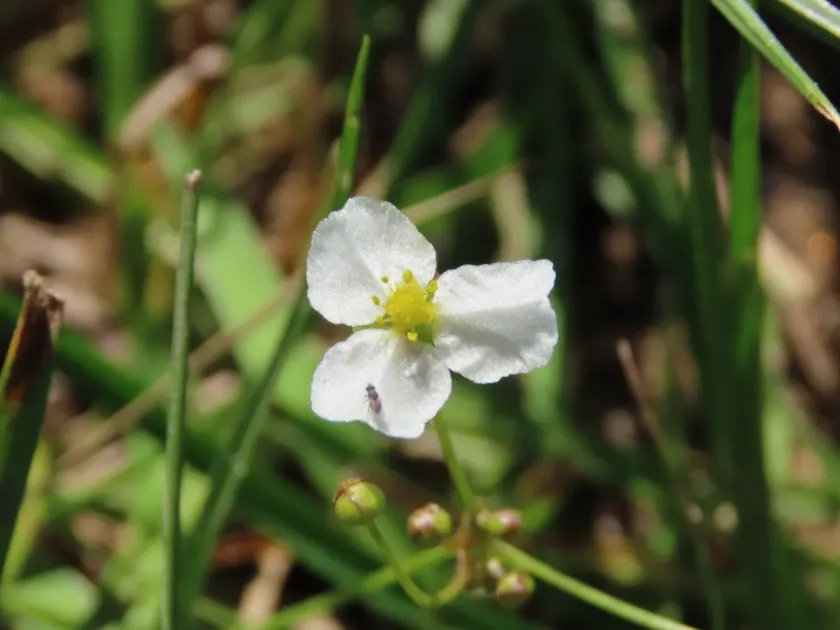
Description
Growing requirements
Helanthium tenellum is an aquatic plant belonging to the Alismataceae family. Originally native to the tropical and subtropical regions of the Americas, this species is well-adapted to swampy environments and seasonal flooding zones.
Known in the hobby as a pygmy chain sword, it is highly valued for its ability to form dense foreground carpets. Its leaves are narrow and lanceolate, creating a lush, grassy look when maintained under appropriate conditions.
The plant requires high light intensity to prevent legginess and to maintain its compact, low-growing form. If the light levels are insufficient, the plant will stretch upward, losing its aesthetic appeal as a foreground cover.
A nutrient-rich substrate is essential for the healthy development of its root system. Helanthium tenellum benefits significantly from root tabs and supplemental carbon dioxide injection, which promotes faster spreading through its stolons.
Optimal growth occurs in water temperatures between 22 and 28 degrees Celsius. The species prefers slightly soft to moderately hard water conditions with a stable pH range, ideally between 6.0 and 7.5 for best results.
Main diseases and pests
One of the primary threats to this plant is the competition with algae, especially hair algae, which can easily overgrow the delicate, low-lying leaves if nutrient levels are unbalanced.
Iron deficiency is a common health issue, identified by the yellowing of new growth. Regular supplementation of micronutrients is required to ensure the plant maintains its vibrant green coloration.
Improper substrate management can lead to root rot, especially if the sediment becomes compacted and anaerobic. Proper substrate grain size and circulation are key to maintaining a healthy rhizosphere.
While pests are not common, some herbivorous snails can damage the leaves if the plant is weak or if there is a shortage of other food sources in the aquarium ecosystem.
Fluctuations in water parameters, particularly sudden changes in pH or temperature, can trigger a stress response, resulting in leaf decay and the collapse of the plant carpet.