
Hedycarya angustifolia
Hedycarya angustifolia
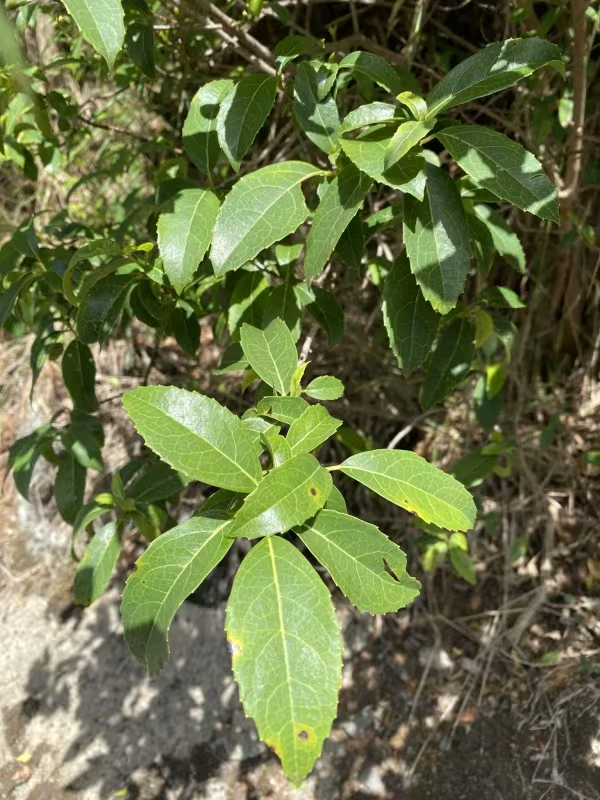
Description
Sowing dates
The propagation of Hedycarya angustifolia is typically achieved through seed germination or vegetative cuttings, requiring precise management in controlled environments.
Seeds often require cold stratification to break dormancy, ensuring that the embryo is ready to develop when conditions become favorable for growth.
Sowing in spring is recommended, utilizing a well-draining peat-based medium that maintains moisture without leading to anaerobic conditions in the root zone.
Cuttings should be taken from semi-hardwood stems during the active growing season, applying rooting hormones to ensure successful establishment of the new plant.
Once rooted, the plants must undergo a hardening-off process in a nursery environment to prepare them for the challenges of transplanting into the field.
Growing requirements
Hedycarya angustifolia belongs to the Monimiaceae family, naturally occurring as an evergreen shrub or small tree in the moist forests of Australia.
The plant thrives in fertile, loamy soils that possess a slightly acidic to neutral pH, which is essential for nutrient uptake and overall metabolic health.
Regarding climate, the species prefers temperate regions with stable humidity, as it lacks significant tolerance for extreme heat or severe freezing conditions.
While tolerant of low light levels, commercial production benefits from dappled sunlight, which encourages dense foliage development and healthy growth patterns.
Optimal agro-technique involves consistent watering, particularly in the initial years, and the application of mulch to conserve soil moisture and suppress weeds.
Main diseases and pests
The primary threats to the cultivation of this species include root rot pathogens, which are often exacerbated by poor drainage and excessive soil saturation.
Leaf-feeding insects represent a significant pest concern, capable of damaging the plant's aesthetic and structural integrity if left unmanaged over a period.
Effective management strategies include the implementation of integrated pest management (IPM) practices, emphasizing biological controls where possible.
Preventative care involves ensuring adequate spacing between individual plants to promote airflow, thereby reducing the risk of airborne fungal diseases.
Regular inspection of the root system and foliage allows for early detection of potential outbreaks, enabling timely intervention to maintain plant vigor.