
Bog orchid
Hammarbya paludosa
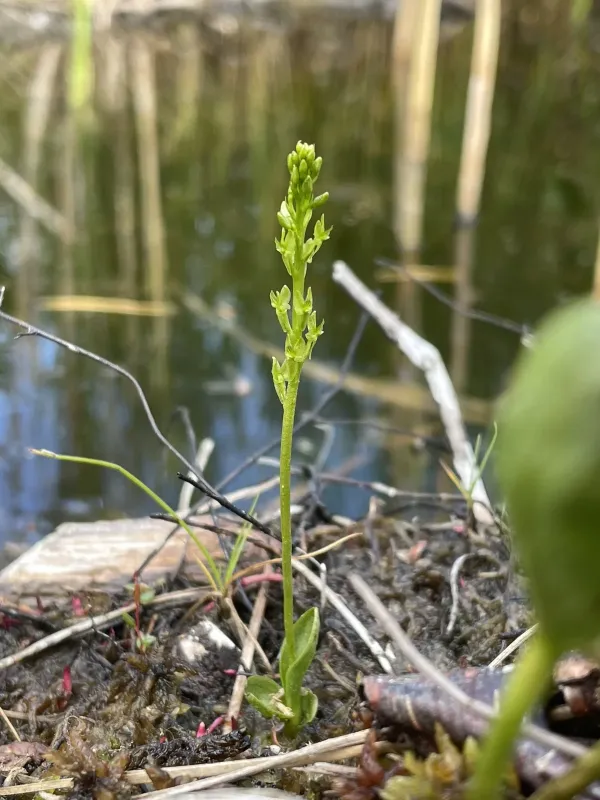
Description
Growing requirements
The bog orchid (Hammarbya paludosa) is a small perennial herbaceous plant belonging to the Orchidaceae family. It is known for its diminutive size and its strictly specialized habitat requirements within wetland ecosystems.
This species is not an agricultural crop and has no history of commercial cultivation. It serves as a vital component of bog biodiversity, thriving in nutrient-poor, acidic sphagnum bogs where it relies on symbiotic fungi for nutrient absorption and development.
The distribution of this orchid spans temperate and subarctic regions of Eurasia. It requires extremely stable hydrological conditions; even minor changes in the water table, such as those caused by drainage for agricultural purposes, pose a fatal threat to local populations.
Botanically, the plant features a small pseudobulb at the base of the stem and leaves that are capable of vegetative propagation through specialized buds along their margins. This allows the orchid to colonize patches of moss efficiently under stable environmental conditions.
There are no established agricultural practices or harvest methods for this species because it is a protected plant in many countries. Its primary value lies in ecology and conservation biology rather than production, and therefore it is never subject to typical farming threats or disease management programs.