
Hammada schmittianum
Hammada schmittianum
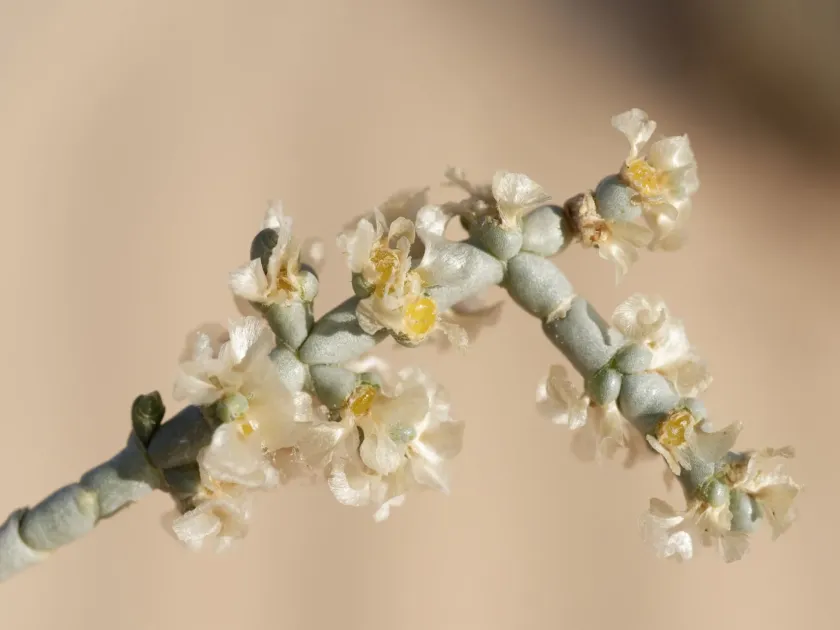
Description
Growing requirements
Hammada schmittianum is a perennial subshrub belonging to the family Amaranthaceae, subfamily Chenopodioideae. This plant is a typical representative of desert flora, adapted to the harsh ecological conditions of Central Asia.
The crop is characterized by a high degree of xerophytism and halophytism, allowing it to grow in saline, rocky, or sandy soils where other agricultural crops cannot survive. It successfully colonizes degraded lands and shifting sands.
For optimal development, the plant requires arid conditions with minimal rainfall and high solar radiation. The root system of Hammada is robust and branched, capable of reaching significant depths to find moisture, which makes it indispensable for soil stabilization.
Agronomic requirements involve minimal interference with the natural environment, as the plant is highly sensitive to excessive moisture and soil compaction. When introduced, it is crucial to consider the temperature regime, as the species tolerates both significant summer heat and severe winter frosts.
Its primary economic use is in pasture-based livestock farming, where Hammada serves as a valuable reserve forage for camels and small ruminants during the winter season. It also holds significant soil-protective value, preventing erosion and deflation in arid agricultural areas.
Main diseases and pests
Despite its high resilience, Hammada schmittianum is susceptible to specific pests of desert ecosystems, including locusts, which can damage the vegetative mass during periods of mass outbreaks.
Diseases in the wild are rare due to the severe climate; however, in attempted cultivation on irrigated plots, root rot infections caused by excessive soil moisture are possible.
Anthropogenic impact remains the primary threat: overgrazing on plots with Hammada leads to the degradation of the vegetation cover and the destruction of the plant's root system.
Parasitic plants, common in the range of Chenopodiaceae, also pose a threat, potentially reducing the overall productivity of the plant communities.
To preserve crops, it is recommended to restrict grazing during periods of active growth and to monitor the phytosanitary condition of populations during dry seasons.