
Halophila stipulacea
Halophila stipulacea
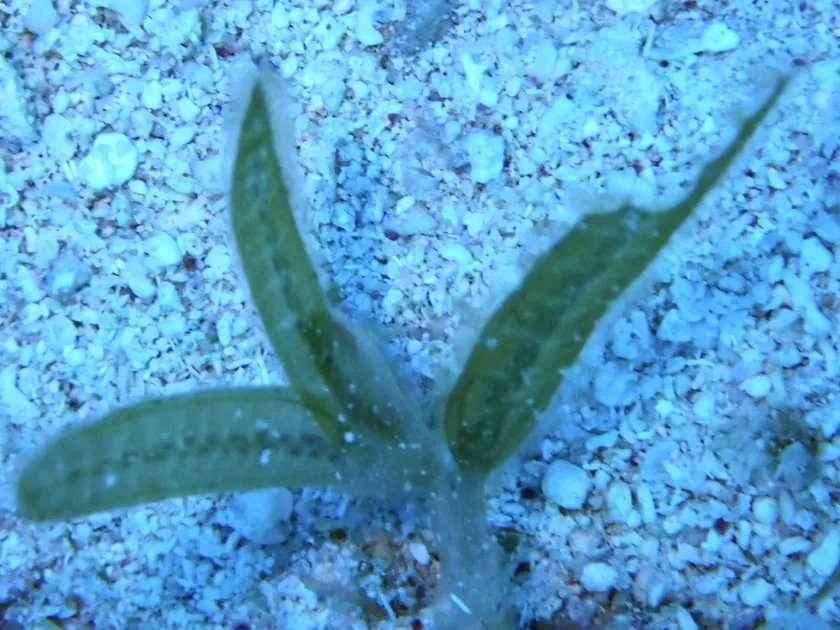
Description
Growing requirements
Halophila stipulacea is a perennial seagrass belonging to the family Hydrocharitaceae. It is characterized by a creeping rhizome system that allows it to spread rapidly across sandy and muddy substrates in tropical and subtropical marine environments.
Originating from the Indo-Pacific region, specifically the Red Sea and the Indian Ocean, it has become a prolific invader in the Mediterranean Sea. The plant prefers shallow, sheltered coastal waters where it can form extensive, carpet-like meadows on the seafloor.
The environmental requirements for this species include relatively high water temperatures and adequate sunlight penetration. It thrives in depths ranging from a few meters to 50 meters, provided the water clarity is sufficient to support its photosynthetic processes.
Agrotechnical management in the context of marine restoration focuses on sediment stability. The plant requires nutrient-rich but well-oxygenated sediments to support its root system, which plays a crucial role in carbon sequestration and sediment stabilization.
Economically, Halophila stipulacea is studied for its ability to filter nitrogen and phosphorus from the water column. Its biomass is increasingly analyzed for potential applications in bio-fertilizer production and as a sustainable feed source for aquaculture operations.
Main diseases and pests
The primary threats to this seagrass include physical disturbance from marine traffic, particularly anchors and trawling equipment. Such activities disrupt the rhizome structure, leading to the fragmentation and loss of large areas of seagrass meadows.
Water pollution and excess nutrient runoff (eutrophication) pose a severe risk. These factors encourage the growth of algae that shade the seagrass, reducing the light availability and causing the plant to wither and die due to limited photosynthetic activity.
Disease outbreaks, often exacerbated by rising sea temperatures, represent a critical biological threat. Pathogenic microorganisms can rapidly colonize stressed patches of the plant, leading to widespread decay and significant ecological damage.
Coastal development and dredging activities significantly increase water turbidity. Increased suspended solids block necessary sunlight and physically clog the leaf surfaces, preventing the plant from maintaining its metabolic functions.
Grazing pressure from marine herbivores, such as sea turtles and certain fish species, acts as a natural control mechanism. However, overgrazing in restricted areas can lead to the collapse of the seagrass community, especially when combined with other stressors.