
Inflated liverwort
Gymnocolea inflatar
Description
Growing requirements
Gymnocolea inflata, commonly known as the inflated liverwort, is a species of liverwort belonging to the family Gymnomitriaceae. It is a non-agricultural species, primarily found in wild, natural environments, functioning as a vital component of wetland and heathland biodiversity.
The plant is native to the Northern Hemisphere, with its distribution covering a wide range of boreal and arctic regions. It is typically found in habitats such as raised bogs, wet heaths, and along the margins of acidic pools where nutrient availability is low.
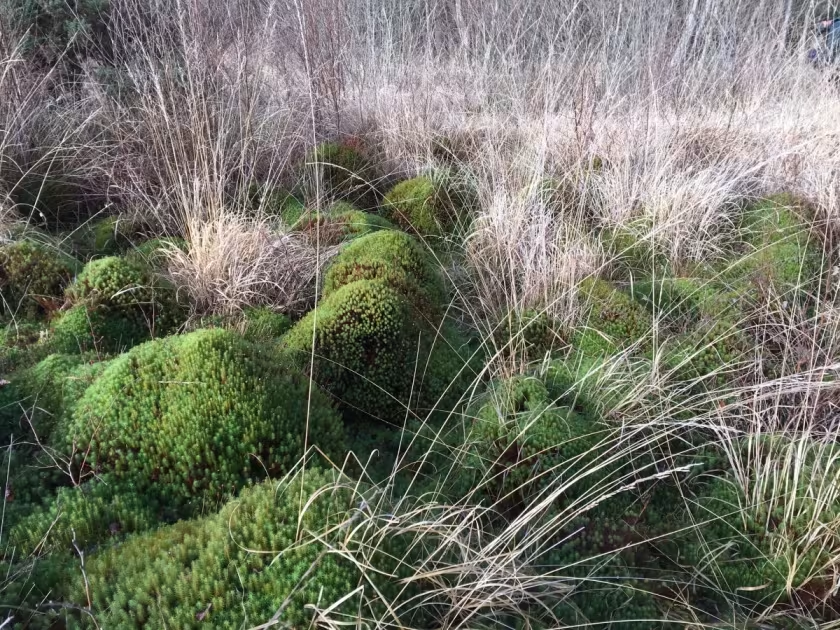
Botanically, it features small, leafy shoots that form dark green or brownish-purple mats. Its leaves are deeply bilobed and often imbricated, a structural adaptation that helps the plant retain moisture during dry spells, which is essential for survival in exposed, acidic environments.
Growth conditions require high atmospheric humidity and constant soil acidity. The species is highly sensitive to soil chemistry and does not tolerate competition from higher plants, often colonizing bare peat or wet rock surfaces where other vegetation cannot establish itself.
From an agricultural standpoint, it has no direct economic value as a crop. However, in studies related to environmental management, it serves as a valuable indicator species for monitoring the health of peatland ecosystems and assessing the impacts of land drainage or climate change.
Main diseases and pests
The primary threats to Gymnocolea inflata are habitat destruction, particularly through drainage and peat extraction. Once the water table drops, the delicate physiological balance of the plant is disrupted, leading to local extinction.
Pollution from agricultural runoff, specifically nitrogen and phosphorus enrichment, also poses a significant threat. These nutrients alter the delicate acidic chemistry of its substrate, allowing more aggressive vascular plants to outcompete the liverwort population.