
Guioa diplopetala
Guioa diplopetala
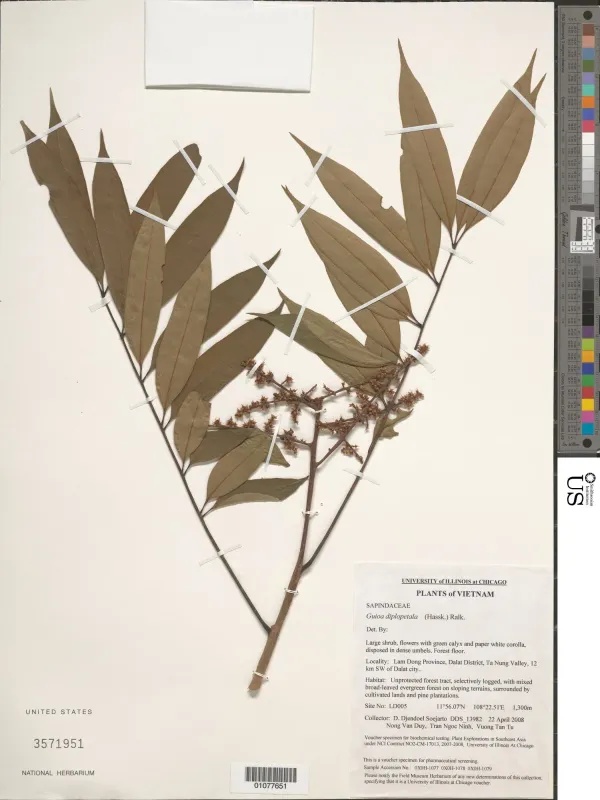
Description
Growing requirements
Guioa diplopetala is a woody plant species belonging to the Sapindaceae family. Native to the rainforest regions of Australia, it functions as a medium-to-large evergreen tree or robust shrub in natural forest settings.
The plant thrives in tropical and subtropical climates where high humidity is constant. It is not frost-tolerant, so protection during cooler seasons is essential for its successful survival and growth.
Regarding soil requirements, this species favors well-draining, nutrient-rich soil with a slightly acidic to neutral pH. Providing ample organic mulch helps mimic the forest floor environment it prefers.
Cultivation practices include providing partial shade for young specimens, transitioning to full sun as the plant matures. Consistent soil moisture is necessary, but the root system must be protected from prolonged waterlogging.
Economically, it is mainly utilized in ornamental horticulture and forest restoration projects within its native range. The wood and botanical characteristics are of interest to researchers studying plant diversity.
Main diseases and pests
Fungal pathogens represent the primary threat to Guioa diplopetala, particularly in environments with poor air circulation. Leaf spot and root rot are common issues if the soil remains too wet for extended periods.
In terms of pests, scale insects and mealybugs are the most frequent offenders. They tend to infest the foliage and succulent stems, leading to stunted development and the potential spread of sooty mold.
Effective management strategies include regular scouting and the use of horticultural oils or systemic insecticides when outbreaks reach economic thresholds in nursery settings.
Environmental stress, such as extreme heat combined with low humidity, can cause leaf scorch. Providing windbreaks is a practical agronomic measure to mitigate such damage in exposed cultivation areas.
Proper sanitation, including the prompt removal of dead plant tissue, is a fundamental aspect of maintaining the long-term health of Guioa diplopetala populations in managed landscapes.