
European dwarf cherry
Prunus fruticosa Pall.
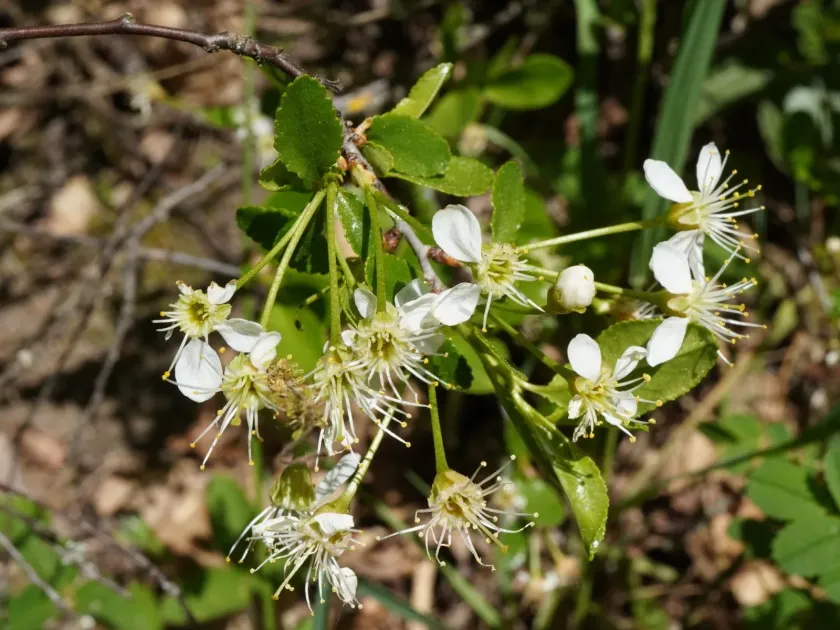
Description
Growing requirements
The European dwarf cherry (Prunus fruticosa Pall.), also referred to as the steppe cherry, is a perennial shrub belonging to the Rosaceae family. It is renowned for its remarkable resilience and ability to thrive in challenging environmental conditions.
Originating from the Eurasian steppes and forest-steppe zones, this plant has adapted to withstand cold winters and hot, dry summers. Its biological architecture allows it to develop extensive root systems, effectively colonizing open landscapes.
Cultivation requirements include well-drained, nutrient-rich soils with a neutral or slightly alkaline pH. The plant is particularly intolerant of waterlogging, which necessitates planting on elevated ground or slopes to ensure proper moisture regulation.
Botanically, it is characterized by a vigorous sucker-producing habit, creating dense thickets that serve as both windbreaks and fruit-bearing hedges. The height usually varies between 0.5 and 2 meters, depending on the specific growing conditions and light availability.
In agricultural practice, it is primarily used in breeding programs to confer frost hardiness to commercial sweet and sour cherry varieties. Its fruit is also processed into various culinary products, including jellies, juices, and traditional liqueurs.
Main diseases and pests
Coccomyces leaf spot is a prevalent fungal disease that significantly impacts the photosynthetic capacity of the plants. Effective management involves the removal of fallen leaves in autumn to reduce the primary inoculum load.
Monilia blight can cause substantial damage by inducing blossom and twig dieback. Pruning infected branches during the dormant period is a critical cultural practice to maintain the health of the plantation.
Pests such as the cherry fruit fly and various species of aphids pose a constant threat during the growing season. Integrated pest management strategies, including the use of pheromone traps, are recommended for organic and sustainable farming.
Cytospora canker is another disease that targets weakened or injured stems, often following harsh winters or physical damage. Proper site management and preventing mechanical injuries help minimize the impact of this pathogen.
Regular monitoring of canopy density is advised to facilitate better air circulation, which helps inhibit the spread of fungal spores. Choosing resistant genotypes remains the most effective long-term solution against common regional diseases.