
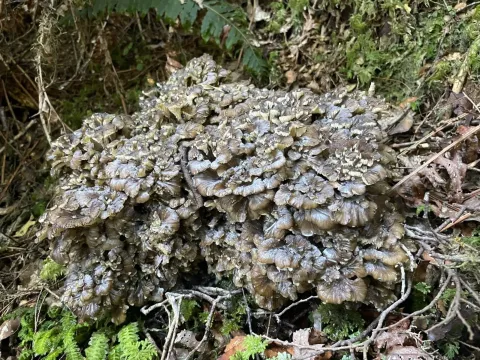
Grifola frondosa
Grifola
The cultivation of Grifola frondosa, widely known as Maitake, begins with the precise preparation of substrate blocks based on hardwood sawdust.
What the section contains

Grifola frondosa
Inoculation must be performed under strictly sterile conditions, as the mycelium of this species is highly susceptible to contamination by competitive molds.
After inoculation, the blocks undergo an incubation phase lasting between 45 and 60 days in a climate-controlled environment to ensure full mycelial colonization.
Temperature during incubation should be kept steady to prevent the premature triggering of primordial growth before the substrate is fully exhausted.
Once the colonization is complete, the blocks are transferred to a fruiting chamber, where environmental triggers stimulate the development of mushroom clusters.
Grifola frondosa requires a high relative humidity level of 85–90% throughout the entire fruiting process to ensure healthy development.
Temperature control is vital, with the optimal range for fruit body formation being between 16 and 22 degrees Celsius.
Lighting is a necessary requirement for this mushroom, as it promotes the development of the characteristic frond-like structures and optimal pigmentation.
Proper ventilation is crucial, as the accumulation of carbon dioxide can significantly deform the mushrooms and lower their commercial value.
The substrate composition must be high in lignin and cellulose, mimicking the natural environment of decaying oak or beech tree roots.
Productivity in Grifola frondosa cultivation depends heavily on the quality of the spawn and the nutrient balance of the sawdust substrate used.
Under professional conditions, a biological efficiency of 20–30% can be achieved, resulting in substantial yields per individual substrate block.
Typically, Maitake is treated as a single-flush crop, as the substrate energy is often exhausted after the production of the initial heavy fruiting cluster.
To maximize operational yields, growers often utilize vertical shelving systems to make the most of the cubic footage within climate-controlled chambers.
Strategic monitoring of substrate moisture content helps prevent excessive drying, which is a common cause of reduced yields in commercial settings.
The most common disease impacting Grifola frondosa is Trichoderma, commonly known as green mold, which rapidly colonizes the substrate if hygiene is neglected.
Bacterial blotch, caused by Pseudomonas species, can lead to dark, water-soaked spots on the mushroom clusters if humidity is too high and airflow is stagnant.
Fungus gnats (sciarids) are frequent pests that infest the substrate blocks, potentially damaging the fungal mycelium and spreading spores of harmful pathogens.
Mites can act as vectors for various diseases and require rigorous sanitation protocols within the growing facility to keep populations under control.
Proper sterilization of all equipment and substrates is the primary defense strategy against these common mycological threats.
The harvest period is determined by the development stage of the clusters, aiming to pick them before the edges of the fronds begin to curl upwards.
Clusters should be harvested using a sharp, sterilized knife, cutting at the base of the block to minimize debris left on the substrate.
Immediately after harvest, mushrooms should be cooled to approximately 2–4 degrees Celsius to maintain structural integrity and freshness.
Given their delicate structure, Maitake mushrooms require careful handling and packaging to avoid bruising the fragile, leafy clusters.
The final product is typically sold fresh, dried, or processed into extracts for the nutraceutical and culinary markets due to its high medicinal value.