
Maitake
Grifola frondosa (Fr.) S.F. Gray
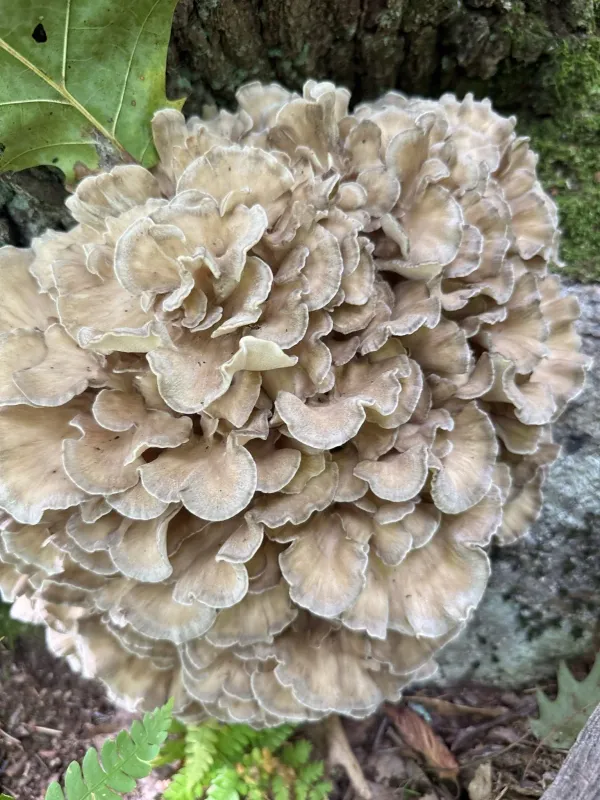
Description
Sowing dates
Grifola frondosa, commonly known as Maitake or Hen of the Woods, belongs to the family Fomitopsidaceae. In the wild, it grows at the base of hardwood trees, particularly oaks, where it acts as a white-rot parasite.
To cultivate this fungus, professional growers use substrate blocks formulated from hardwood sawdust, wood chips, and supplementary nitrogen sources such as rice bran or wheat bran to boost mycelium growth.
The substrate must be sterilized or pasteurized to eliminate competing mold species. Once cooled, the substrate is inoculated with high-quality grain spawn under strict aseptic laboratory conditions.
The incubation phase takes place in dark, climate-controlled rooms where the mycelium colonizes the substrate fully, a process that typically spans 40 to 60 days depending on the strain's vigor.
Advanced commercial farms use specialized breathable mushroom bags that allow gas exchange while keeping contamination out, ensuring a uniform and healthy colonization of the substrate block.
Growing requirements
The transition to the fruiting stage requires a change in environmental conditions. The temperature should be lowered to 15-18 degrees Celsius, and relative humidity must be maintained between 85 and 95 percent.
Light is essential for the development of Maitake. Unlike some fungi, Grifola frondosa requires a daily light cycle (typically 8-12 hours of low-intensity light) to produce well-formed, branched fruit bodies.
Proper ventilation is crucial. Maitake is sensitive to carbon dioxide accumulation, which can cause elongated, abnormal growth. Regular air exchange is necessary to ensure the mushrooms develop their signature clustered shape.
The pH of the growth medium should be balanced between 5.5 and 6.5. This slightly acidic environment is ideal for the mycelium while inhibiting the rapid spread of certain bacterial pathogens.
Monitoring the moisture content of the substrate is vital throughout the fruiting phase. Any significant drop in humidity can cause the sensitive caps of the Maitake to dry out and stop growing prematurely.
Yield
Under optimal conditions, the biological efficiency of Maitake cultivation is generally around 20-30 percent. A five-kilogram block can yield between 1 and 1.5 kilograms of fresh mushrooms in a single flush.
Yields are heavily influenced by the strain selection and the precise ratio of sawdust to supplements. Excessive supplements can cause the block to overheat during incubation, reducing overall productivity.
While Maitake is often treated as a single-flush crop, some growers manage to induce a secondary flush by rehydrating the substrate block, though the second crop is usually smaller and of lower quality.
Commercial yields are optimized through systematic monitoring of the growth environment, ensuring that nutrient uptake by the mycelium is maximized before the fruiting trigger is applied.
Consistent production depends on the quality of the spawn. Using vigorous, stable strains ensures uniformity in size and maturity, which is critical for meeting the standards of the gourmet food market.
Main diseases and pests
Trichoderma, or green mold, is the primary threat in Maitake cultivation. It can quickly overtake a substrate block if sterilization was inadequate or if spores have entered the growth chamber.
Bacterial blotch, caused by Pseudomonas bacteria, appears as dark, slimy spots on the caps. It is usually a result of water sitting on the fruit bodies and insufficient airflow during the harvest stage.
Pests like sciarid flies and spider mites are common vectors for pathogens. Installing fine-mesh screens on air intakes and maintaining rigorous sanitation standards are key to preventing infestations.
Heat stress during incubation can lead to mycelial death, leaving the substrate vulnerable to thermophilic bacteria and other contaminants that produce toxins and ruin the block.
Integrated pest management, including regular disinfecting of equipment and surfaces, is the most effective way to protect the crop throughout the long cultivation cycle.
Harvesting
Harvesting should occur just before the mushrooms reach full maturity. The ideal time to pick Maitake is when the edges of the fronds are light-colored and the clusters are dense and firm.
Carefully cut the entire cluster at the base using a sharp, sterilized knife. Avoid damaging the substrate surface, as this helps prevent infection if the block is kept for a second flush attempt.
The harvested mushrooms should be cleaned by gently brushing off debris rather than washing them with water, as their porous structure absorbs moisture quickly and can accelerate spoilage.
Post-harvest handling involves cooling the product to 2-4 degrees Celsius immediately. Proper refrigeration significantly extends shelf life and maintains the nutritional integrity of the fungus.
Packaging should use breathable materials to allow the mushrooms to respire. Proper logistics ensure that the delicate Maitake reaches the consumer in the same prime condition as when it was harvested.