
Greyia sutherlandii
Greyia sutherlandii
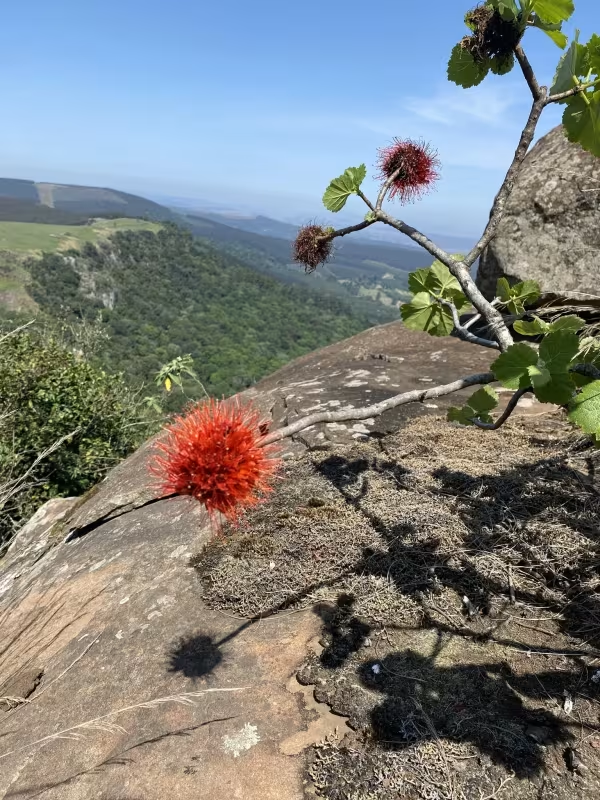
Description
Growing requirements
Greyia sutherlandii, commonly known as the Natal bottlebrush, is a robust deciduous shrub or small tree belonging to the Francoaceae family. It is endemic to the rocky slopes of the Drakensberg mountains in South Africa, where it thrives in rugged, well-drained terrain.
Botanically, it is recognized for its spectacular coral-red, raceme-like flower clusters that emerge from the woody branches before the foliage appears. The leaves are distinctively shaped, heart-to-kidney-like with serrated margins, adding texture to its appearance throughout the growing season.
To cultivate Greyia sutherlandii successfully, one must prioritize a sunny, open location. The species is highly adapted to high-light environments and will struggle to bloom if planted in shaded areas. Its architectural form makes it a focal point in xeriscape and rock gardens.
Soil requirements focus primarily on drainage. The roots are sensitive to anaerobic conditions; therefore, the planting medium should be sandy or gravelly. Incorporating grit or pumice into the soil mix is highly recommended for containerized specimens.
Climate tolerance is restricted to mild frost zones. While it can handle short-term cold snaps, consistent exposure to freezing temperatures may damage the outer branches. In colder climates, winter protection or indoor overwintering is strictly necessary for survival.
Main diseases and pests
The most significant threat to Greyia sutherlandii is root rot caused by poor soil drainage. If the water remains stagnant around the root ball, the plant will quickly exhibit signs of stress, such as yellowing leaves and limb dieback.
Pest management involves monitoring for sap-sucking insects like aphids and scale insects, which often colonize the tender new growth during the spring transition. Early manual removal or targeted application of insecticidal soap can manage these outbreaks effectively.
Spider mites represent a secondary threat, particularly when the plant is kept in dry, indoor environments with poor airflow. Regular misting and maintaining optimal humidity levels help deter mite infestations.
Fungal leaf spot can occur if the foliage is kept excessively wet, especially in climates with high humidity levels. Pruning to ensure proper air circulation throughout the shrub's canopy is an essential preventative cultural practice.
Maintaining a clean growing space and removing decaying plant debris around the base of the shrub helps prevent the overwintering of pests and pathogens. Consistent attention to these sanitary practices supports long-term vigor.