
Greyia radlkoferi
Greyia radlkoferi
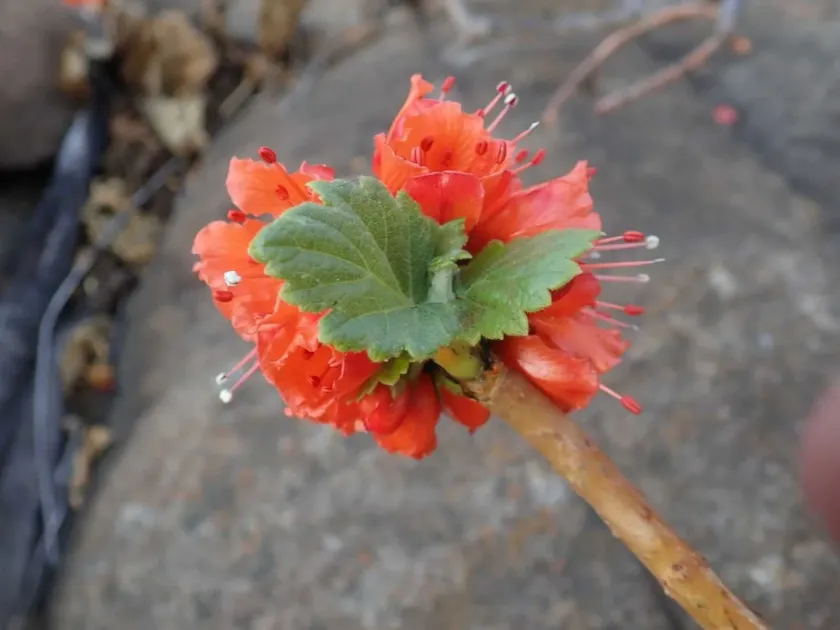
Description
Growing requirements
Greyia radlkoferi is a distinct deciduous shrub or small tree, which is a member of the family Greyiaceae. Native to the rocky slopes of South Africa, this plant is well-adapted to environments where drainage is excellent and nutrient availability is sporadic.
The botanical structure of this species is defined by its heart-shaped leaves and spectacular crimson-colored flower spikes that bloom in dense clusters. During the autumn season, the foliage changes color, adding an ornamental value that is highly prized in horticultural circles.
When cultivating Greyia radlkoferi, providing ample sunlight is essential for optimal flower production. The soil must be loose, well-draining, and slightly acidic, mimicking the natural conditions found in its native mountain habitats.
Regarding climate, the plant thrives in mild conditions and is sensitive to heavy frosts, which restricts its outdoor cultivation to temperate or subtropical zones. In colder areas, it is frequently grown in large containers to allow for movement into protected environments during winter.
The primary use of this crop is aesthetic, serving as a focal point in rock gardens or xeriscaping projects. Ongoing research often looks into its hardiness and potential for incorporation into sustainable landscapes that require low-water maintenance plants.
Main diseases and pests
Common pests encountered by growers include mealybugs and spider mites, which typically target the undersides of the leaves. Managing these populations involves consistent monitoring and the application of appropriate horticultural soaps or systemic insecticides when necessary.
Fungal issues, primarily root rot, represent the most significant threat to the plant's health. Prevention is largely achieved by ensuring the planting medium remains well-aerated and that drainage is never compromised by water accumulation in the potting or garden site.