
Graptopetalum amethystinum
Graptopetalum amethystinum
Description
Growing requirements
Graptopetalum amethystinum is a charming succulent belonging to the Crassulaceae family. Native to Mexico, this plant thrives in rocky, arid environments, making it highly specialized for drought survival and intense light conditions.
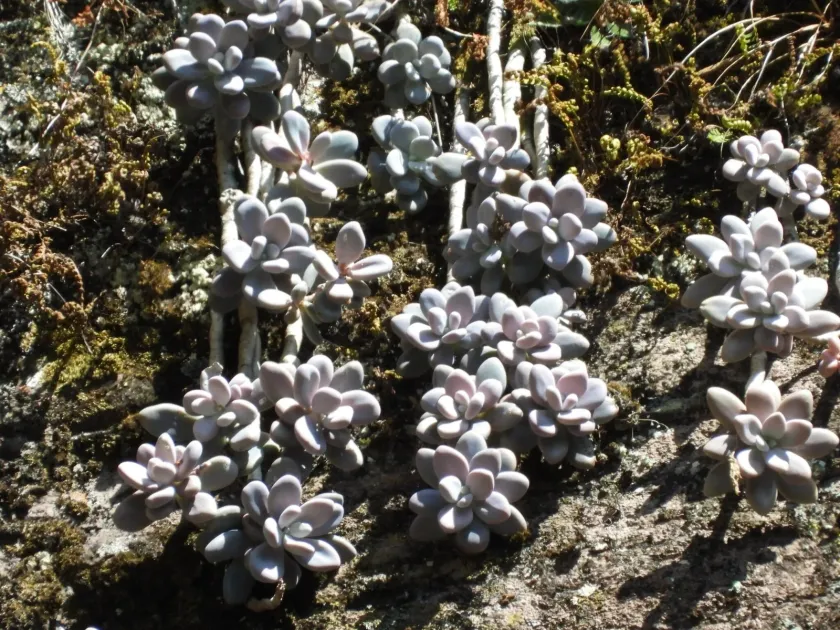
The plant grows in a compact rosette form, consisting of thick, rounded leaves. These leaves feature a delicate, powdery, glaucous coating, which provides the plant with its signature amethyst or lavender hues and serves as protection from UV radiation.
Cultivation requires bright, indirect sunlight or direct morning sun. Providing sufficient light is crucial for maintaining the plant's shape and color; without it, the succulent will stretch (etiolate) and fade to a dull green.
Well-draining soil is a fundamental requirement. A mixture consisting of 50% inorganic components, such as pumice, perlite, or coarse sand, and 50% standard potting soil, is recommended to ensure the roots do not sit in stagnant water.
Watering should be performed only when the soil has completely dried out. In winter, Graptopetalum amethystinum enters a dormant phase and requires minimal moisture to prevent root rot and maintain the integrity of its succulent tissues.
Main diseases and pests
The primary threat to this species is overwatering, which quickly leads to fungal infections and root rot. Maintaining a porous substrate and a container with adequate drainage holes is essential for the plant's long-term health.
Mealybugs are the most common pests found on this succulent. They tend to hide in the crevices between leaves and at the base of the rosette, where they extract plant juices and weaken the host significantly.
Spider mites can also become an issue, particularly in environments with poor air circulation and low humidity. Their presence is usually identified by the fine webbing and stunted growth observed at the center of the rosette.
Root mealybugs may occur if the soil remains damp for extended periods. If the plant stops growing suddenly or looks dehydrated despite adequate watering, it is advisable to inspect the root system for these soil-dwelling pests.
Proper ventilation is key to preventing moisture-related problems. Keeping the surface of the soil covered with a layer of grit helps prevent the lower leaves from touching wet soil, further reducing the risk of rot and bacterial diseases.