
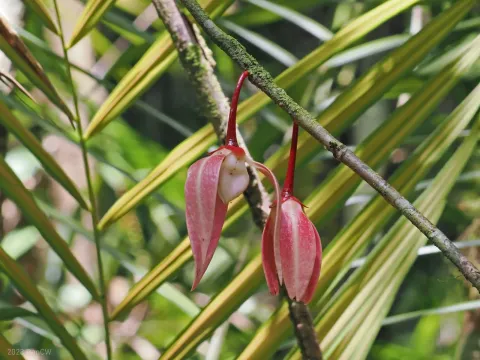
Goniothalamus
Goniothalamus (Blume) Hook. f. & Thomson
Goniothalamus is a genus of evergreen trees and shrubs belonging to the Annonaceae family, natively distributed across the tropical regions of Southeast Asia. These plants are well-known in ethnobotany for their specialized secondary metabolites and historical use in traditional medicine.
What the section contains

Goniothalamus
The cultivation of Goniothalamus requires a tropical or subtropical environment with consistently high humidity and temperatures. In controlled environments, such as greenhouses, it is essential to maintain temperatures between 22 and 28 degrees Celsius to mirror their natural habitat.
Soil requirements are strict: the medium must be nutrient-dense, slightly acidic, and highly permeable to water. Poor drainage often leads to root rot, which is a major limiting factor for growers who struggle with irrigation management in indoor or container-based settings.
Regarding light, Goniothalamus species are adapted to the understory of tropical forests. Therefore, they thrive best under filtered light conditions. Excessive direct sunlight can scorch the foliage and degrade the quality of plant secondary compounds if grown for chemical extraction.
Propagation is typically achieved through seeds, which should be sown immediately after harvest to ensure viability. Vegetative propagation via cuttings is possible but requires high-humidity propagation chambers and the application of rooting hormones to overcome the slow growth rate of the wood.
Root rot caused by Phytophthora or Pythium species is the most common threat to Goniothalamus in cultivation. This usually occurs when the irrigation regime is too heavy or when the soil medium loses its structure and prevents aeration of the root system.
Pests such as scale insects and spider mites present a recurring challenge. Scale insects often attach to the underside of leaves and stems, whereas spider mites proliferate during periods of low humidity, causing visible stippling and necrosis on leaves.
Fungal leaf spots are frequently observed if air circulation is insufficient within the greenhouse or indoor area. Ensuring proper spacing between plants and maintaining adequate airflow helps significantly in reducing disease incidence.
Nutrient imbalances, particularly iron chlorosis, can occur if the pH of the growing medium shifts too high. Regular testing of the soil or substrate is recommended to maintain the appropriate acidity levels for optimal nutrient uptake.
Environmental stress, such as sudden temperature drops or cold drafts, can cause significant leaf drop. Protecting the plants from temperature fluctuations is vital for their long-term health and biomass production.