
Globimetula braunii
Globimetula braunii
Description
Growing requirements
Globimetula braunii is a hemiparasitic plant belonging to the Loranthaceae family. Unlike conventional crops, it does not obtain nutrients from the soil independently. Instead, it relies on a host plant, attaching itself to branches and trunks to siphon off water and minerals via specialized organs known as haustoria.
This species is native to tropical regions of Africa. It thrives in diverse environments, ranging from dense forests to savanna landscapes, where it colonizes various tree hosts. Its ability to spread is closely linked to its co-evolution with local avian species that facilitate seed dispersal.
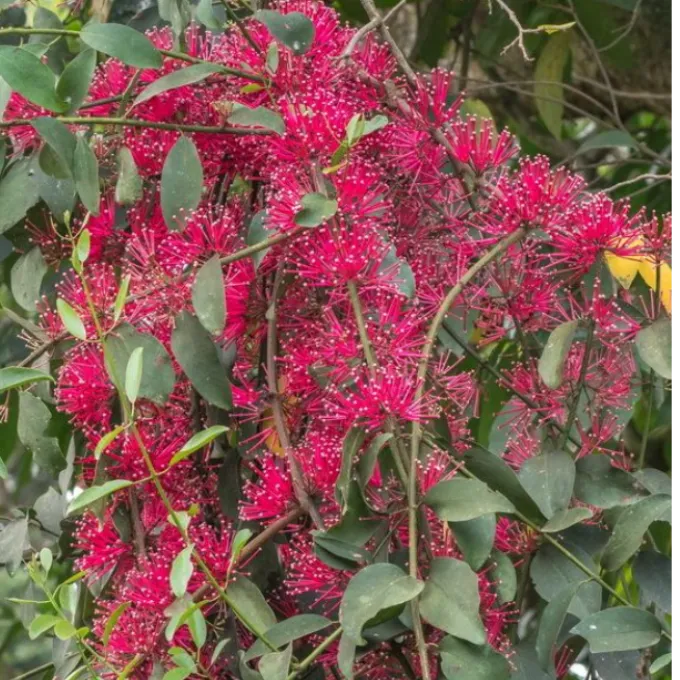
The botanical structure of this plant features leathery leaves and tubular, brightly colored flowers designed for pollination by nectar-feeding birds. The fruits are typically fleshy berries, which contain sticky seeds that adhere to bird beaks and branches, ensuring the parasite reaches new host sites effectively.
From an agronomic perspective, Globimetula braunii is not a cultivated species but rather a biological threat to forestry and orchards. It competes directly with the host tree for resources, leading to significant physiological stress that can reduce the vigor and lifespan of the affected tree species.
Environmental requirements for this plant are centered on the availability of suitable host trees and a tropical climate with sufficient rainfall. It is generally sensitive to extreme water scarcity, which serves as a natural barrier to its colonization of certain arid zones within its broader geographical range.
Main diseases and pests
The primary impact of Globimetula braunii is the gradual debilitation of the host tree. By diverting essential water and nutrients, the parasite weakens the tree's structural integrity and photosynthetic capacity, which often manifests as canopy thinning, stunted growth, and the dieback of branches distal to the infection site.
Management strategies focus on the mechanical removal of the parasitic clusters. Arborists and foresters recommend regular inspections to prune out infestations at an early stage. Preventing the maturation of seeds is the most effective method for controlling the spread of the parasite to uninfected host trees in the vicinity.