
Gevuina
Gevuina avellana
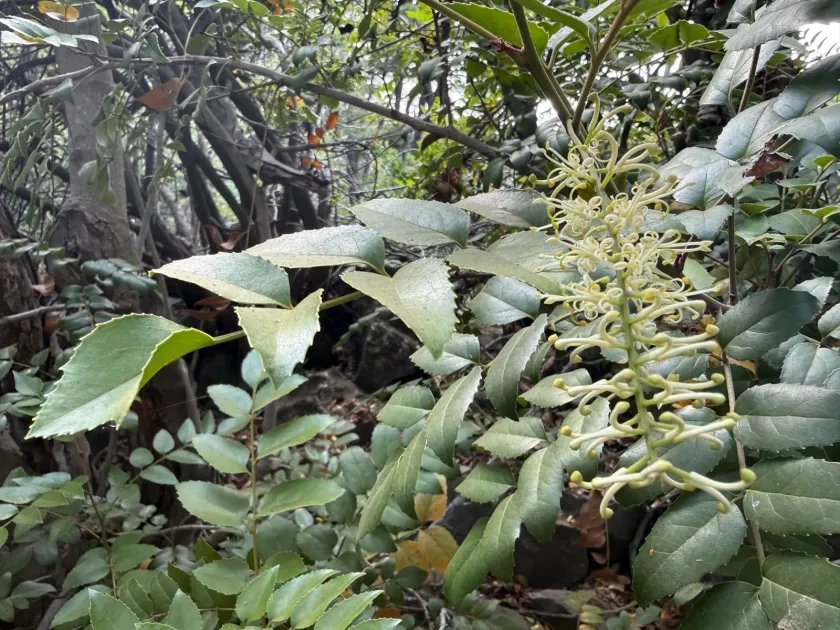
Description
Growing requirements
Gevuina avellana, commonly known as the Chilean hazelnut or "avellano", is an evergreen tree or shrub belonging to the Proteaceae family. It is native to the temperate rainforests of Chile and Argentina, where it thrives in cool, humid environments.
The plant requires well-drained, acidic to slightly acidic soils that are rich in organic matter. Proper soil structure is essential, as the species is highly sensitive to waterlogging, which can quickly lead to root rot and tree mortality.
Gevuina prefers a maritime climate with moderate temperatures. It does not tolerate extreme heat or prolonged drought, requiring consistent moisture throughout the growing season to maintain healthy leaf development and fruit production.
While the tree can tolerate light frosts down to -7°C to -10°C, extreme or repeated freezing temperatures can damage its foliage and limit its long-term productivity. It is best suited for sheltered sites protected from strong, desiccating winds.
The plant is biologically capable of self-pollination, yet cross-pollination between different individuals typically results in higher fruit yields. Growers should ensure optimal spacing to allow for adequate airflow, which is critical for reducing humidity-related diseases.
Yield
The primary agricultural output of Gevuina avellana is its nut, which has a distinct flavor profile similar to a hazelnut but with a unique chemical composition. The kernels are rich in monounsaturated fatty acids, making them highly nutritious.
The nuts are used both in food products and in the cosmetic industry. The oil extracted from the nuts is valued for its high stability and moisturizing properties, frequently appearing in high-end skincare formulations and natural beauty products.
Trees typically begin to bear fruit between the 5th and 7th year after planting. Mature trees reach their peak production levels after 15 to 20 years, provided they receive proper maintenance, including regular pruning and balanced nutrient management.
In addition to nut production, the wood of the Gevuina tree is highly regarded for its physical properties. It is hard, durable, and exhibits an attractive grain, making it a valuable material for high-quality cabinetry and decorative interior woodwork.
Economic prospects for Gevuina farming are growing, particularly as global demand for diverse nut sources and plant-based oils increases. Farmers focusing on sustainable cultivation methods can achieve consistent harvests in favorable temperate zones.
Main diseases and pests
Fungal pathogens represent the most significant threat to Gevuina plantations, especially in regions with high humidity or heavy soils. Root rot is a common issue when drainage systems fail to remove excess moisture effectively.
Various insect pests, including leaf-eating beetles, can affect young trees. Integrated pest management, which includes regular monitoring and the use of biological control agents, is recommended to protect the trees during their establishment phase.
Frost damage to succulent new growth can weaken the plant's natural defenses, making it more susceptible to secondary infections. Growers should practice careful sanitation, removing dead or damaged wood to prevent the spread of fungal spores.
Weed control is essential during the early stages of the tree's life to eliminate competition for water and soil nutrients. Thick mulch layers can suppress weed growth and help maintain soil moisture stability during drier intervals.
Maintaining balanced soil fertility is crucial for overall health. Excessive use of nitrogenous fertilizers should be avoided, as it can encourage overly rapid vegetative growth at the expense of the plant's systemic resilience and winter hardiness.