
Sticky desert-sunflower
Geraea viscida
Description
Growing requirements
Geraea viscida, commonly known as the sticky desert-sunflower, is a perennial herb belonging to the Asteraceae family. This species is highly specialized for thriving in arid, harsh desert environments where few other crops could survive.
The native distribution of this plant is limited primarily to the southwestern United States, particularly southern California. It is well-adapted to the high-temperature cycles and irregular precipitation patterns characteristic of these regions.
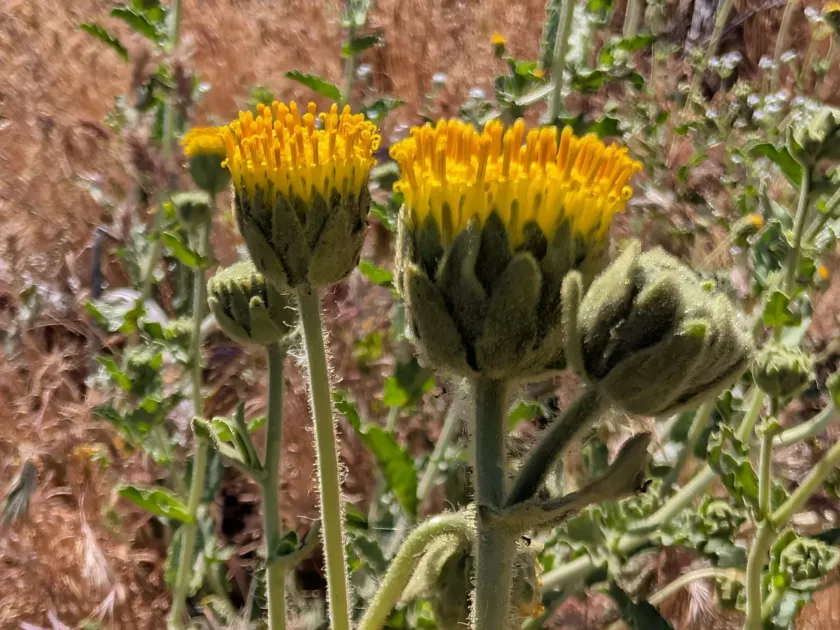
The plant exhibits distinct botanical traits, most notably the sticky glandular hairs that cover its foliage and stems. This feature acts as an effective strategy to reduce transpiration and prevent water loss under intense desert heat.
Regarding soil requirements, Geraea viscida demands well-drained, porous substrates to prevent root saturation. It performs best in sandy or gravelly soil types that mimic the natural drainage conditions of its native desert habitats.
In terms of agricultural and horticultural use, the plant is primarily cultivated for ornamental purposes in xeriscaping projects. Its low-maintenance nature makes it an ideal candidate for ecological restoration in arid areas requiring minimal human intervention.