
Desert Sunflower
Geraea canescens
Description
Growing requirements
The Desert Sunflower (Geraea canescens) is an annual herbaceous plant belonging to the Asteraceae family. It is native to the arid desert regions of the southwestern United States and northwestern Mexico, commonly found in the Mojave and Sonoran deserts.
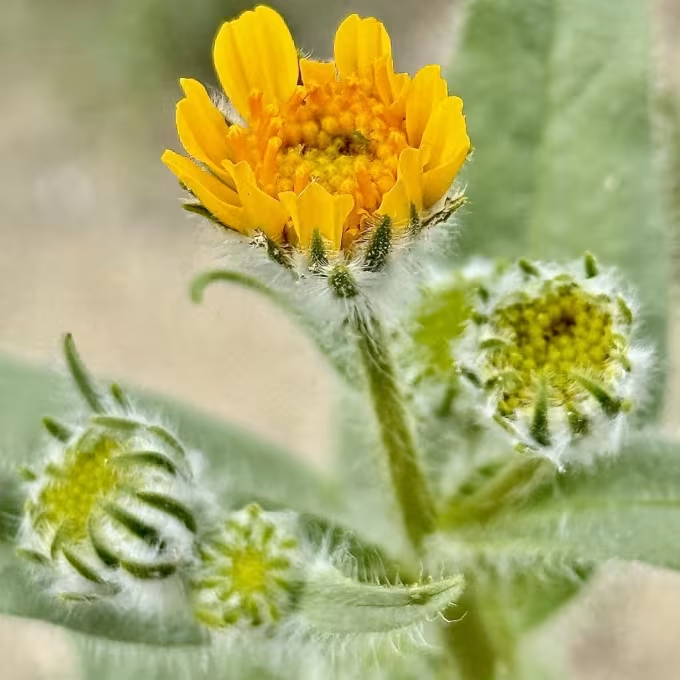
Botanically, the plant is characterized by its white, woolly hair covering the leaves and stems. This physical trait serves as a crucial adaptation to the harsh desert environment, reflecting intense solar radiation and minimizing water loss through evapotranspiration during peak heat periods.
The plant thrives in well-drained, sandy, or rocky soils typical of desert washes and flats. In terms of climate requirements, it demands high levels of sunlight and can survive on extremely limited annual precipitation, typically completing its life cycle rapidly following spring rains.
Agrotechnical management of this species is minimal, as it is a naturally wild-growing plant. When introduced into environmental projects, direct seeding is the primary method of propagation, provided the timing coincides with favorable moisture conditions in the soil profile.
Economically, while not a commercial commodity crop, the species is valued for its potential in ecological restoration and erosion control. Its ability to colonize degraded soils makes it an object of interest for agronomists focusing on climate-resilient vegetation management.
Main diseases and pests
The Desert Sunflower is remarkably resistant to standard agricultural pests. Its main threats in nature include seasonal browsing by desert herbivores such as rabbits or ground squirrels, which may reduce biomass during early growth stages.
Pathogen risks are low under arid conditions. However, if subjected to irrigation or excessive humidity, the plants become susceptible to root rot and other fungal infections, which are rarely observed in their natural, arid habitat where soil moisture levels are very low.