
Geniostoma rupestre
Geniostoma rupestre
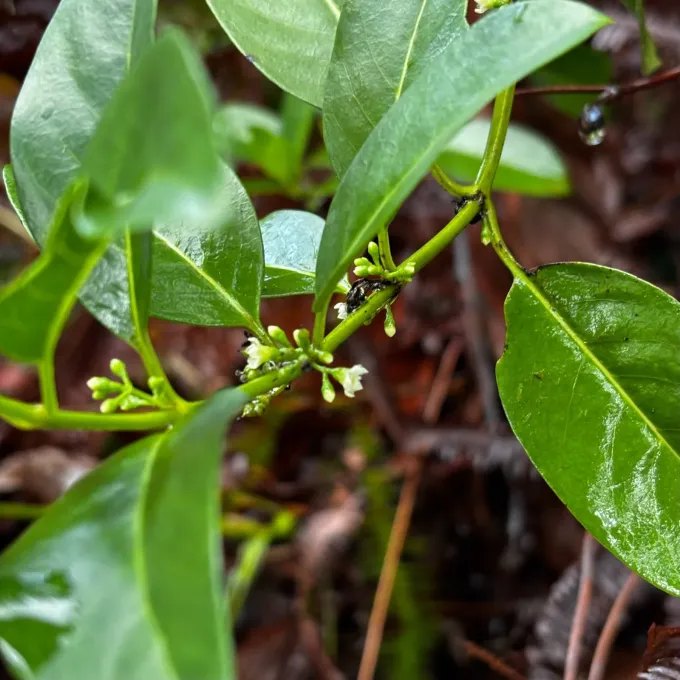
Description
Growing requirements
Geniostoma rupestre is a perennial woody plant belonging to the Loganiaceae family. It generally manifests as a robust shrub or small tree, characterized by its resilient, leathery foliage and adaptability to specific maritime climates.
The plant originates from the Pacific region, particularly within the Oceania archipelago. Its natural habitat includes coastal zones and forest edges where moisture levels remain consistent throughout the year, supporting stable growth cycles.
To successfully cultivate this species, growers must provide a frost-free environment with high atmospheric humidity. It is best suited for regions mimicking its native habitat, where extreme temperature fluctuations are minimized.
Soil requirements focus on well-draining, nutrient-rich substrates with a neutral to slightly acidic pH level. Overly compacted soils can be detrimental to the health of the plant, often leading to restricted root development.
In landscape architecture, Geniostoma rupestre is highly regarded for its aesthetic properties. It is often utilized as a screening plant or a specimen shrub in subtropical gardens, where it contributes to biodiversity and structural greenery.
Main diseases and pests
The primary threats to Geniostoma rupestre include various root pathogens that thrive in waterlogged conditions. Preventing standing water around the base of the shrub is critical to avoiding permanent damage to the root system.
Common pests affecting the species involve scale insects and aphids. These pests often congregate on the underside of leaves or along succulent stems, draining nutrients and weakening the plant's structural integrity.
Fungal infections, such as powdery mildew, may occur in environments with poor air circulation. Improving spacing between individual plants and pruning dense clusters of branches can significantly mitigate these risks.
Integrated pest management strategies are recommended, focusing on biological controls where possible. In severe cases, targeted insecticide applications should be used in accordance with environmental safety standards.
Consistent monitoring for physiological disorders, such as nutrient deficiencies, is part of standard care. Proper fertilization programs help maintain vibrant foliage and ensure the plant’s natural resistance to secondary stress factors.