
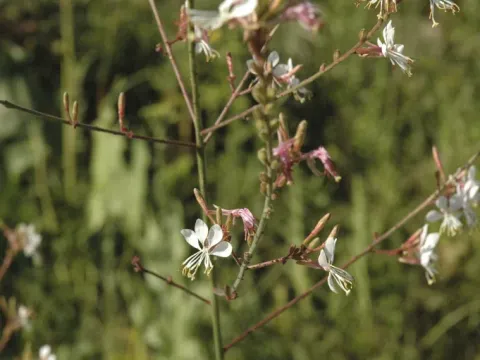
Gaura
Gaura
Gaura is a perennial herbaceous plant belonging to the Onagraceae family. In agricultural practices, seeds are typically sown in early spring to establish seedlings before the main growing season.
What the section contains


Gaura
The optimal time for indoor sowing is late February or March. Providing stable temperatures is crucial for successful germination, which usually occurs within two to three weeks after planting.
Seeds should be distributed over the surface of a prepared substrate and lightly covered with soil. Maintaining constant humidity is essential until the seedlings appear, as the seeds are sensitive to desiccation.
Transplanting into open ground occurs once the danger of spring frost has completely passed. The plant requires well-prepared, loose soil to develop its deep root system efficiently.
Spacing between individual plants is vital for the health of the entire crop. Sufficient space ensures good airflow and reduces the risk of fungal infections within the dense foliage.
This crop demands sunny locations with light, well-drained soil. Gaura is particularly sensitive to waterlogging, so soil structure must allow for rapid drainage to prevent root damage.
The plant thrives in moderate to warm climates, showing high tolerance to intense sunlight. It is an excellent choice for areas with long, hot summers where water availability is managed.
Fertilization should be balanced, focusing on organic matter. Over-fertilizing with nitrogen can lead to excessive foliage growth at the expense of flower production, which is undesirable.
Watering should be managed carefully, favoring a deep soak occasionally rather than frequent light sprinkling. Once established, the root system is highly efficient at extracting water.
Pruning is a necessary agronomic practice for Gaura. Cutting back the stems after the first flush of flowers encourages continuous blooming and maintains the compact shape of the plant.
Root rot is the most serious threat to Gaura, primarily caused by poorly drained soil or excessive irrigation. Once symptoms appear in the root zone, recovery is often difficult.
Powdery mildew is a common foliar disease triggered by high humidity and poor air circulation. It manifests as a white dusty layer on leaves, which reduces the plant's photosynthetic capacity.
Aphids are the primary pests that attack the tender growing points and flower buds. They feed on plant sap and can transmit viral diseases if not controlled in a timely manner.
Spider mites represent a risk during hot and dry periods. They create fine webbing and cause foliage to become discolored, leading to significant stress for the plant during summer.
Integrated pest management involves regular field scouting and the use of preventative cultural practices. Removing debris and maintaining weed-free rows significantly lowers pest pressure.