
Mangosteen
Garcinia mangostana L.
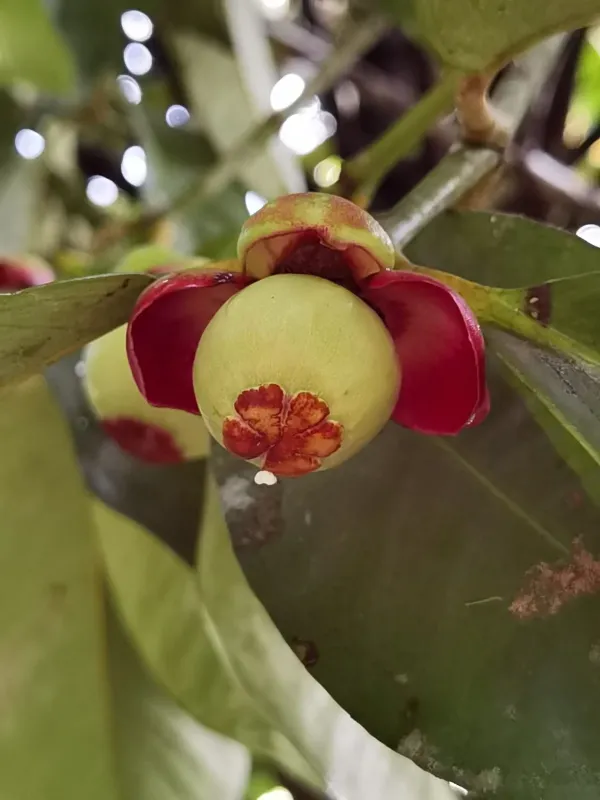
Description
Growing requirements
Mangosteen (Garcinia mangostana L.) is an evergreen tropical tree belonging to the Clusiaceae family. The plant is extremely sensitive to environmental conditions, which limits its commercial cultivation to specific equatorial zones with high humidity and stable, non-fluctuating temperatures.
For successful growth, the crop requires consistent temperatures ranging between 25 and 35 degrees Celsius. Even brief exposure to temperatures below 5 degrees Celsius can prove fatal to the tree, rendering mangosteen unsuitable for cultivation in temperate climate regions.
The tree prefers deep, organic-rich, and well-drained soils with a pH level between 5.0 and 6.5. High atmospheric humidity is a critical success factor; insufficient watering or dry air significantly slows shoot growth and negatively impacts the fruit quality.
The crop requires protection from strong winds that can mechanically damage leaves and fruits. The optimal site for planting is a shaded area, as young seedlings are highly sensitive to intense, direct sunlight which can cause leaf scorch.
Standard agronomic practices involve regular application of complex fertilizers and organic matter, though care must be taken to avoid waterlogging the root system. Excessive soil moisture triggers root rot, which is a common cause of tree mortality in commercial orchards.
Yield
Mangosteen is characterized by a slow growth rate, making it a challenging crop for rapid financial returns. Trees grown from seeds typically take 7 to 10 years, and sometimes longer, to reach the reproductive stage and produce their first fruits.
The yield of a mature tree depends heavily on the plant's age and the quality of management. During peak productivity, a healthy tree can produce between 200 and 500 fruits per season, although average yields on commercial plantations usually range from 100 to 300 fruits.
Fruiting often exhibits a biennial bearing pattern, where a high-yield year is followed by a year of lower productivity. Modern agronomic practices focus on regulating flowering to stabilize harvest volumes across different years.
The economic utilization of mangosteen includes not only fresh fruit consumption, highly prized for its delicate flavor, but also the use of the pericarp (rind) in pharmacology due to its high concentration of xanthones and other bioactive compounds.
Harvesting is performed manually because the fruits are highly sensitive to physical impact and require careful handling to maintain their commercial appearance. Logistics are complicated by the fruit's short shelf life at room temperature.
Main diseases and pests
Fungal diseases, thriving in consistently high humidity, pose the primary threat to mangosteen plantations. The most severe issues involve fruit infections that lead to premature decay and loss of market value.
Among pests, various species of scale insects, aphids, and thrips cause significant damage by feeding on the sap of young leaves and shoots. Their activity weakens the plant and promotes the development of sooty mold on the leaf surfaces.
Root rot, caused by fungi of the genus Phytophthora, is the leading cause of plantation collapse in heavy, poorly drained soils. Prevention relies on strict irrigation management and the use of certified, disease-free planting material.
For pest management, regular monitoring and the use of biopesticides or low-toxicity insecticides are recommended. Chemical applications must be handled with extreme caution due to the tree's slow metabolic rate and the risk of chemical accumulation in the fruit.
- Bacterial leaf blight.
- Infestation by weevils damaging the fruit.
- Root rot caused by waterlogging.