
Galactia tenuiflora
Galactia tenuiflora
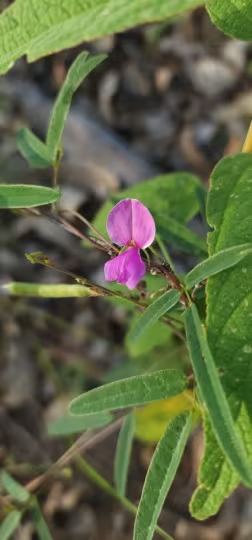
Description
Sowing dates
Galactia tenuiflora is a perennial herbaceous plant belonging to the Fabaceae family, characterized by its climbing and trailing growth habit. In agricultural practice, planting is typically scheduled for the spring season when soil temperatures are consistently above 15 degrees Celsius.
The seeds possess a hard seed coat, which necessitates scarification to improve germination rates. Planting depth is generally maintained at 2 to 3 centimeters to provide sufficient moisture and soil contact while allowing for robust sprout emergence.
Row planting is the standard approach, which facilitates effective management and weed control during the early establishment phase. Proper spacing is essential to ensure adequate airflow between plants, reducing the incidence of fungal pathogens.
In tropical and subtropical regions, the sowing window can be broader, provided the crop is planted at the onset of the rainy season. Adequate soil moisture during the initial weeks is critical for establishing a healthy and deep root system.
Modern agronomic practices emphasize the importance of preparing a clean seedbed to minimize early competition from weeds, which can significantly hinder the growth of this relatively slow-establishing legume.
Growing requirements
This crop thrives in well-drained sandy or loamy soils with a neutral to slightly acidic pH. As a nitrogen-fixing legume, it excels in soils of moderate fertility, though supplemental phosphorus and potassium can enhance overall yields.
Galactia tenuiflora is highly sun-loving, requiring bright light for optimal growth and biomass production. While it can tolerate partial shade in diverse ecosystems, full sun exposure is recommended for agricultural cultivation.
Temperature sensitivity is a limiting factor for this crop, as it is a warm-season species that does not tolerate frost. Optimal development occurs in environments where temperatures remain stable between 20 and 30 degrees Celsius throughout the growing period.
The plant exhibits moderate drought tolerance, making it a viable candidate for regions with variable rainfall. However, supplemental irrigation during peak growth phases ensures maximum forage production and maintains succulent foliage quality.
Agronomic management includes soil health maintenance and monitoring for nutrient deficiencies. Regular assessment of nodulation on the roots is a practical way to ensure the plant is effectively fixing nitrogen and thriving in its environment.
Yield
The primary agricultural use of Galactia tenuiflora is as a forage crop. Its ability to produce high-quality foliage with good protein content makes it a valuable feed source for livestock, particularly in grazing systems.
Yield capacity is influenced by harvesting frequency and climatic conditions. Under intensive management, multiple cuttings per season can be achieved, as the plant possesses a strong regenerative capacity after being mowed.
Beyond its value as animal feed, the crop acts as an effective ground cover. Its dense growth helps protect the soil surface from erosion and improves soil structure over time through root turnover and nitrogen enrichment.
As a sustainable crop, it serves as a green manure, contributing to soil fertility management in diverse agricultural systems. The plant's ability to maintain productivity under challenging conditions makes it an interesting subject for crop improvement programs.
Future potential lies in selecting high-biomass strains that can better adapt to different mechanical harvesting methods, thereby increasing the commercial appeal of the crop in broader agricultural sectors.
Main diseases and pests
Leaf-feeding insects, such as various beetles and weevils, represent a significant threat to Galactia tenuiflora. These pests can cause substantial damage to foliage, directly impacting the plant's photosynthetic capacity and total yield.
Fungal diseases, including powdery mildew and anthracnose, are common threats in humid environments with poor circulation. Integrated disease management, including pruning and selective fungicide application, can mitigate these risks.
Root rot is a persistent problem in poorly drained or waterlogged soils. Ensuring that fields have appropriate slope and drainage is the most effective preventive measure against such soil-borne pathogens.
Nematodes are another potential concern in sandy soil environments, potentially impairing root function. Crop rotation with non-host species is highly recommended to keep nematode populations at manageable levels.
A balanced approach to pest management, favoring biological controls and minimal chemical interventions, is essential to preserve the beneficial soil microbiome and ensure the long-term sustainability of the planting site.
Harvesting
Harvesting for forage should ideally occur at the peak of the flowering stage. At this developmental phase, the nutrient concentration in the foliage is maximized, offering the highest nutritional value for livestock feed.
For seed production, harvesting must be timed carefully as the pods reach maturity and begin to turn brown. Prompt collection is necessary to prevent natural pod dehiscence, which can lead to significant seed loss in the field.
Mechanical harvesting requires careful adjustment of equipment to accommodate the trailing habit of the plant. Specialized headers can help collect the biomass effectively while minimizing crop damage and debris accumulation.
Post-harvest processing involves rapid drying of the forage to prevent spoilage and fungal growth. Proper storage in cool, dry, and ventilated conditions is vital to preserve the nutritional properties of the hay.
Cleaning and grading the seeds after harvest is a necessary step to remove impurities and ensure high germination rates for future planting cycles, contributing to consistent crop establishment year after year.