
Galactia longifolia
Galactia longifolia
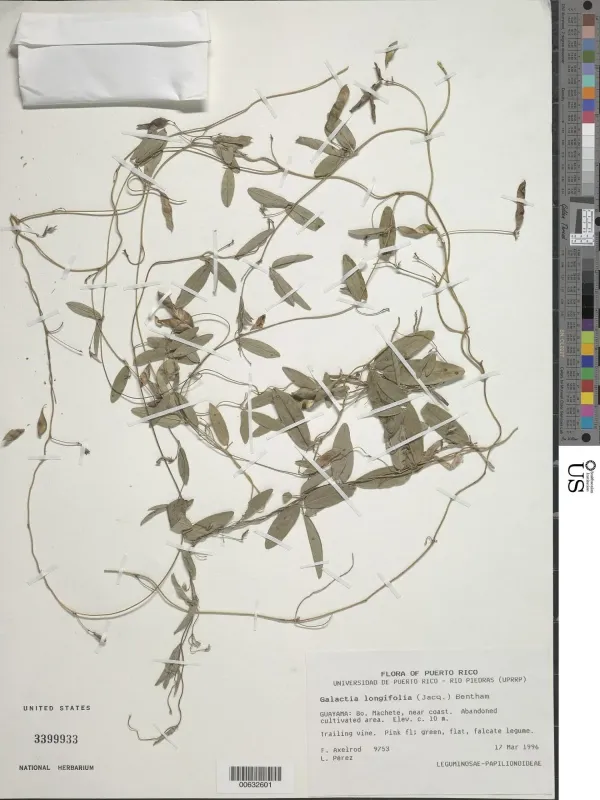
Description
Growing requirements
Galactia longifolia is a perennial legume species belonging to the Fabaceae family, widely recognized for its creeping and vining growth habit in tropical and subtropical ecosystems.
This plant is highly valued for its ability to thrive in diverse environments, demonstrating significant resilience in nutrient-poor soils common in its native range.
The crop prefers well-drained soil conditions and thrives in temperatures ranging from 20°C to 30°C, making it suitable for warm-climate agricultural systems.
Botanically, it features trifoliate leaves with elongated leaflets and produces characteristic papilionaceous flowers ranging in color from pink to purple.
From an agronomical perspective, Galactia longifolia is often employed as a cover crop or green manure, contributing to soil health through nitrogen fixation and organic matter accumulation.
Main diseases and pests
The primary threats to Galactia longifolia include root rot diseases that often emerge in poorly drained soils or during prolonged periods of high rainfall.
Leaf-spotting fungi such as Anthracnose can negatively impact the photosynthetic capacity of the plants, particularly in humid and stagnant air conditions.
Insect pests, specifically aphids and certain species of weevils, can cause damage by feeding on young shoots, buds, and developing foliage during the growth phase.
Invasive weeds can compete with young plants for light and nutrients, necessitating effective weed management practices during the crop establishment period.
Proactive monitoring and the implementation of integrated pest management strategies are essential to maintain crop health and ensure optimal biomass production.