
Gaertnera vaginata
Gaertnera vaginata
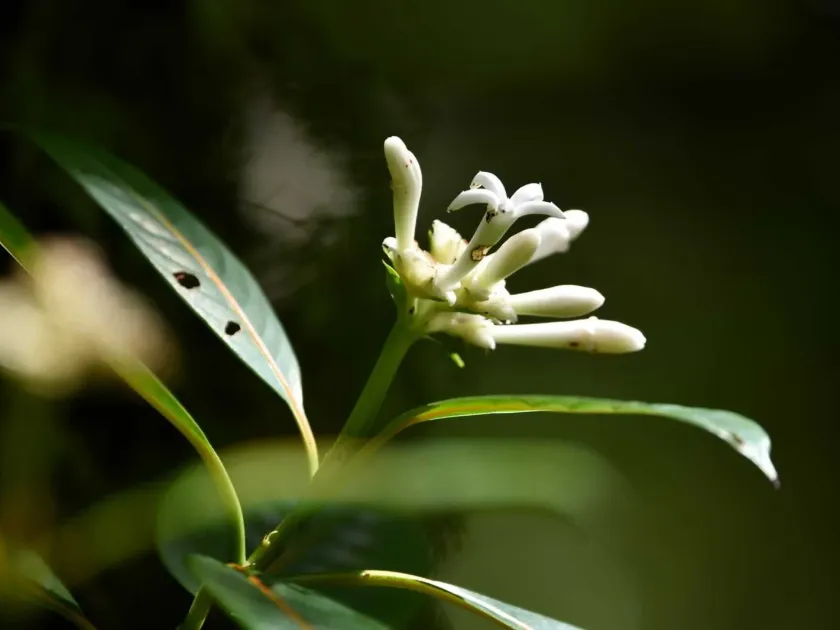
Description
Growing requirements
Gaertnera vaginata is a plant species belonging to the Rubiaceae family. Native to tropical regions, particularly Mauritius, it thrives in warm, humid forest environments.
Morphologically, this species is characterized by its evergreen shrub habit and distinct sheathing stipules, which protect the developing buds along the main stem.
The plant requires a stable tropical climate with high ambient humidity. It is sensitive to low temperatures and requires protection from any risk of frost to ensure continuous growth.
Ideal soil for Gaertnera vaginata should be rich in organic matter, loose, and well-drained. Proper aeration of the root zone is crucial to prevent the development of anaerobic conditions.
Cultivation practices involve maintaining consistent moisture levels and providing filtered sunlight, as intense direct exposure can cause leaf burn in this shade-tolerant species.
Main diseases and pests
Fungal pathogens represent the most significant threat to this crop, particularly in closed environments where air circulation is restricted.
Insects like scale insects and spider mites are frequent pests that infest the leaves, requiring constant monitoring and timely intervention.
Root rot, induced by overwatering or compacted soil, remains the primary cause of mortality in cultivated populations of this plant.
Nutritional imbalances, often resulting from improper fertilization, can lead to stunted growth and reduced resistance to environmental stress.
To mitigate these threats, growers must implement integrated pest management (IPM) strategies, prioritizing sanitary measures and controlled humidity levels.