
Frithia pulchra
Frithia pulchra
Description
Growing requirements
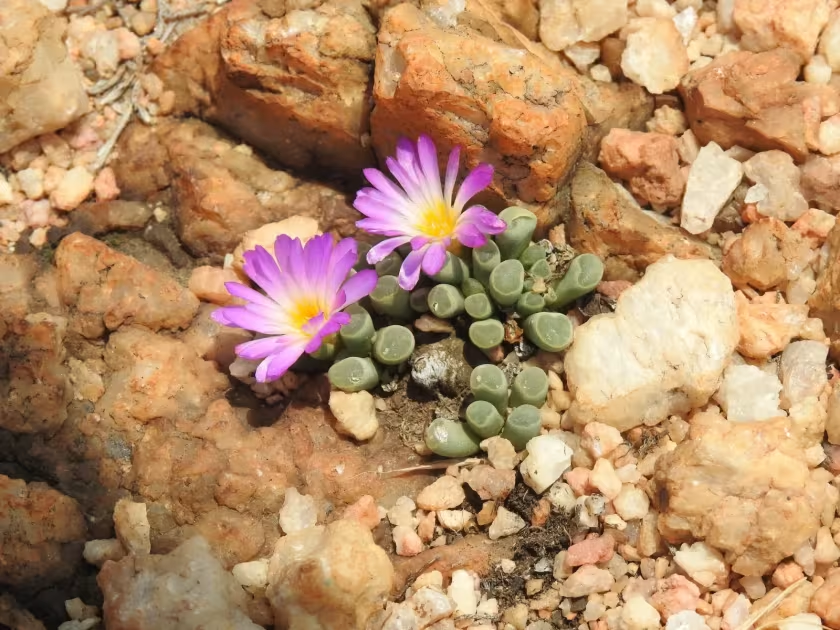
Frithia pulchra, commonly known as Fairy Elephant's Feet, belongs to the Aizoaceae family and is native to the Gauteng province in South Africa. This small succulent is highly prized for its unique window-leaf anatomy, which helps the plant survive in harsh arid conditions.
The plant grows as a lithophyte, adapting to thrive in rock crevices. In cultivation, it requires a very lean, well-draining mineral soil mix. A blend of horticultural sand, pumice, and grit is essential to ensure that water does not accumulate around the delicate root system.
Light requirements are strict; the species demands intense light to maintain its compact habit and to produce its characteristic magenta flowers. However, protection from intense mid-summer midday sun is often necessary to prevent epidermal scorching.
Watering must follow a seasonal cycle. During the active growth period, water thoroughly but only when the soil has completely dried out. In contrast, the winter dormancy period requires dry conditions to prevent the succulent from rotting due to moisture trapped in the crown.
The botanical structure of the leaves includes a specialized translucent layer on the tips. This adaptation allows the plant to bury itself deep within the sand, protecting the core of the plant from extreme desert temperatures while still allowing photosynthesis to occur.
Main diseases and pests
Root rot is the primary threat to Frithia pulchra, almost always caused by excessive watering or poor drainage. Once established, the rot can spread to the leaves rapidly, leading to the total collapse of the plant.
Mealybugs are the most common pests, often settling deep between the tightly packed leaves where they are difficult to reach. Their presence can severely drain the plant's resources and introduce secondary viral infections.
Spider mites may also affect the plant, particularly in conditions with low humidity and high heat. They manifest as fine webbing and can cause the foliage to become discolored and lose its structural integrity.
To maintain plant health, it is essential to monitor the plant for any signs of waterlogging. If the leaves become soft or mushy, immediate action to remove the plant from the pot and allow the roots to dry is required.
Regular inspection is the best defense. Using a magnifying glass to check the leaf axils for pests and ensuring proper ventilation around the plant will significantly reduce the risk of biological threats.