
Clustered domecap
Lyophyllum decastes (Fr.) Sing.
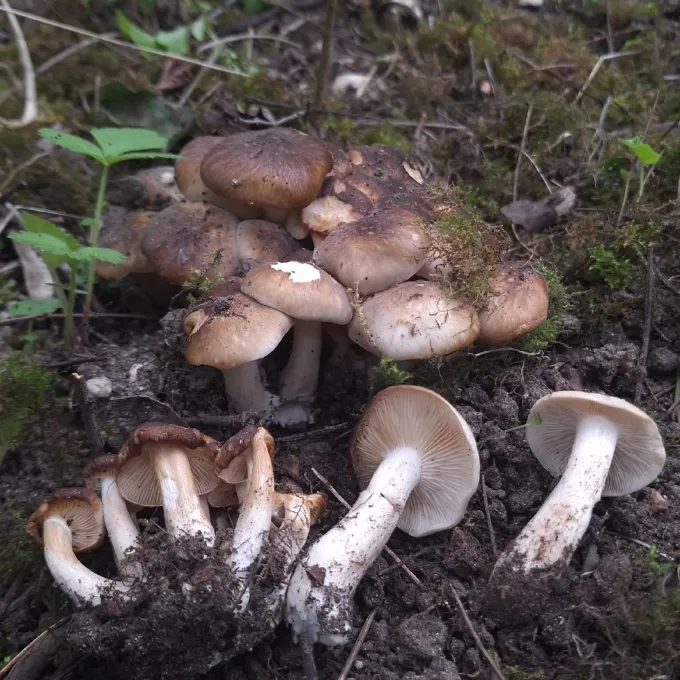
Description
Sowing dates
Clustered domecap is a saprotrophic fungus that can be cultivated on various lignocellulosic substrates. Inoculation should be performed using high-quality grain spawn, which is mixed into a pasteurized substrate composed of straw, wood chips, and organic supplements.
The optimal sowing season is spring or autumn, though indoor climate-controlled facilities allow for year-round production. The incubation period, where the mycelium colonizes the substrate, typically occurs at temperatures between +18°C and +22°C in a dark, humid environment.
Once the substrate is fully colonized, indicated by a dense white network of mycelium, the blocks should be moved to the fruiting chamber. This transition is critical to trigger the development of primordial clusters.
During the spawning process, cleanliness is paramount to prevent competitive molds from invading the substrate. The spawn rate is usually 3–5% of the total wet weight of the substrate block.
Monitoring the growth during the first two weeks post-inoculation allows for early detection of potential contamination. If the mycelium growth appears uneven or discolored, the block should be separated to protect the rest of the crop.
Growing requirements
To produce high-quality fruiting bodies, the environment must replicate the cool, humid conditions of the forest floor. A constant temperature range of +14°C to +17°C is ideal for fruiting, while humidity should be kept at 85–90%.
The substrate requires a neutral pH level, ideally between 6.5 and 7.5. Adjusting the pH with lime or gypsum can help ensure the mycelium grows vigorously without competition from acidic-loving bacteria.
Adequate ventilation is essential to maintain oxygen levels. High CO2 levels inside the growing chamber can lead to malformed mushrooms with long, thin stalks, which are undesirable for commercial sale.
Indirect lighting is recommended for at least 8 to 12 hours a day during the fruiting stage. While these mushrooms do not perform photosynthesis, light acts as a biological signal to initiate cluster formation and ensure healthy pigmentation.
Watering should be done via fine misting to maintain surface moisture on the substrate blocks. Direct soaking of the developing clusters should be avoided to prevent bacterial rot on the caps.
Yield
The yield of Clustered domecap typically reaches 15–20% of the substrate weight over two to three flushes. The first flush is usually the most abundant, providing the bulk of the commercial harvest.
By optimizing the nutrient content of the substrate with additives such as wheat bran, growers can enhance the biological efficiency. However, these additions should not exceed 10% to avoid overheating the blocks.
Proper harvest management, including the total removal of old stumps and debris, helps to maintain the productivity of the second and third flushes. This promotes a cleaner growing environment for subsequent crops.
With correct management, a well-prepared substrate block can remain productive for several weeks. Consistency in temperature and humidity is the primary driver of high yields in this species.
The clustering habit of this mushroom is a significant advantage, allowing for efficient harvesting and grouping of the product for packaging. High-density cultivation is possible in indoor racking systems.
Main diseases and pests
Common contaminants include Trichoderma, a aggressive green mold that thrives in high-humidity environments. Maintaining high hygiene standards and ensuring substrate pasteurization are the best defense mechanisms.
Pests like sciarid flies are a frequent problem in indoor mushroom houses. These insects feed on the mycelium and can transport fungal pathogens from one block to another, potentially ruining the entire harvest.
Bacterial blotch, characterized by slimy, dark lesions on the caps, often occurs when the surface of the mushroom stays wet for too long. Improving air circulation is the primary method to combat this issue.
Mite infestations can stunt the growth of the mycelium or destroy the primordia. Regular inspection of the blocks is necessary to catch infestations early and apply corrective measures.
- Use HEPA filters on ventilation intake systems.
- Implement strict sanitation protocols for staff and equipment.
- Ensure thorough pasteurization of all substrate components.
- Use traps and non-toxic biological controls for insect management.
Harvesting
The harvesting stage is critical; mushrooms should be picked when the clusters are dense but before the caps begin to flatten out or drop spores. At this stage, the texture is firm and the flavor profile is optimal.
Clusters should be harvested by cutting them at the base with a clean, sharp knife. This technique minimizes trauma to the substrate and keeps the remaining mycelium intact for the next cycle.
After harvesting, any damaged or decomposing remnants of the stalks should be removed from the substrate surface to prevent the spread of decay. This step is essential for crop hygiene.
The harvested clusters should be stored in a cool environment (2–4°C) as soon as possible after picking. This slows down the respiration rate and maintains the structural integrity of the clusters.
Proper packaging, such as ventilated containers, ensures that the mushrooms remain fresh during transport. Air exchange is necessary to prevent the buildup of moisture inside the containers.