
Fridericia speciosa
Fridericia speciosa
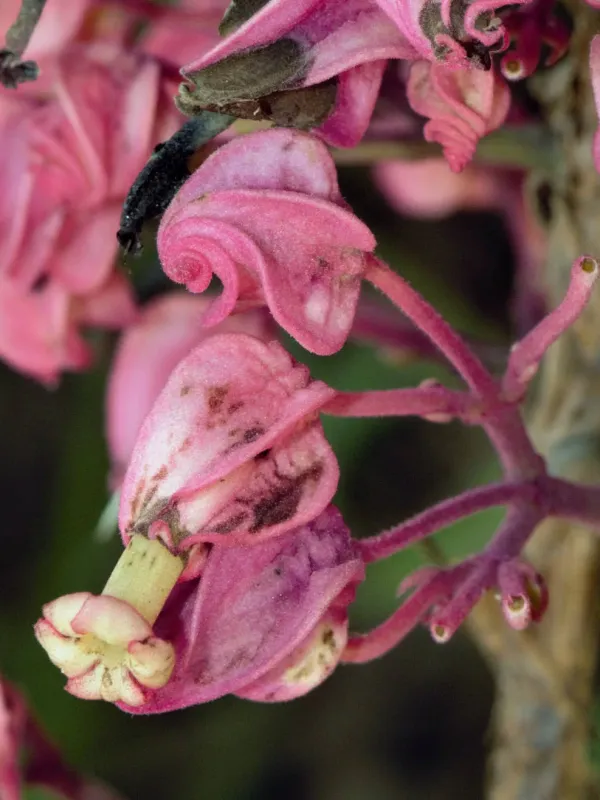
Description
Growing requirements
Fridericia speciosa is a perennial climbing plant belonging to the Bignoniaceae family. Native to South America, this species is highly valued for its vigorous growth and attractive foliage, making it a popular subject for botanical collections.
Cultivation of this vine requires a warm, tropical-like environment. It thrives in locations with plenty of bright, indirect light, though it can tolerate some direct morning sun to stimulate better growth and flowering.
The ideal soil should be rich in organic matter and possess excellent drainage capabilities. A mixture containing peat, compost, and coarse sand or perlite is recommended to prevent root suffocation and waterlogging.
Watering requirements are moderate; the soil surface should be allowed to dry slightly between irrigation sessions. During the active growing season, consistent moisture is vital, while in winter, watering should be significantly reduced.
Given its sensitivity to cold, Fridericia speciosa should be protected from temperatures below 15°C. In temperate climates, it is best managed as a greenhouse or indoor container plant that can be moved outdoors during summer.
Main diseases and pests
Common pests for this plant include spider mites, mealybugs, and scale insects. These pests often congregate on the undersides of leaves or along stems, feeding on sap and weakening the overall plant structure.
Pathogenic fungi, often manifesting as leaf spots or powdery mildew, pose a threat when air circulation is poor or humidity levels are constantly high without sufficient evaporation.
To prevent these issues, it is essential to maintain clean growing conditions. Regularly removing dead or yellowing foliage helps reduce the harbor for pests and improves overall airflow through the vine.
Root rot is a critical risk, typically caused by over-watering or an improper drainage system. If symptoms occur, the plant should be repotted into fresh, sterile substrate after trimming off diseased root segments.
Applying preventative horticultural oil or soap solutions can help manage potential infestations before they become severe, provided the plant is not under environmental stress.