
Flowering almond
Prunus triloba Lindl.
Description
Growing requirements
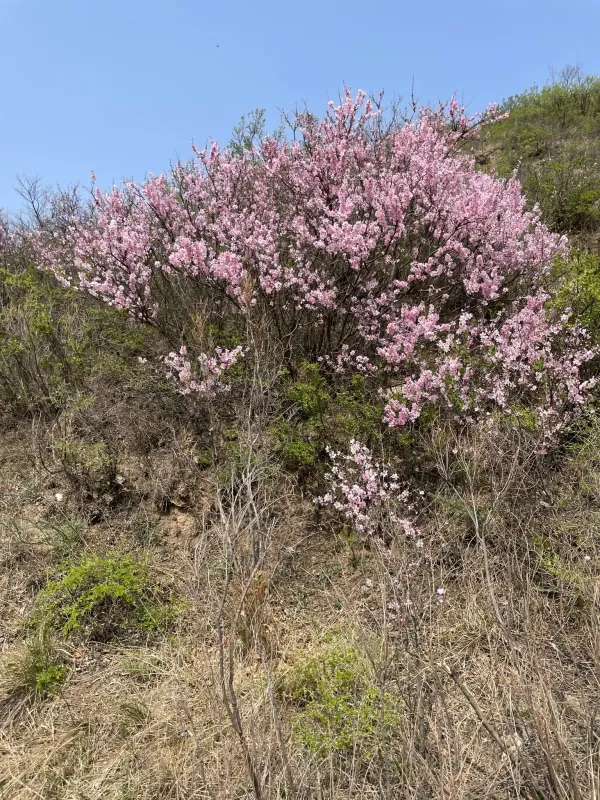
Prunus triloba, commonly known as the flowering almond or double-flowering plum, belongs to the Rosaceae family. This ornamental shrub is highly prized for its early spring display of dense, double, rose-like pink blossoms that cover its bare stems before the leaves fully emerge.
Native to China and Korea, this species thrives in temperate zones. Its natural habitat is typically characterized by woodland edges and mountain slopes, which dictates its preference for well-draining soils and stable light conditions.
The plant requires a sunny location to reach its full ornamental potential. Providing at least six to eight hours of direct sunlight ensures vigorous growth and helps prevent the leggy appearance that often occurs in semi-shaded environments.
Regarding soil requirements, it prefers fertile, neutral to slightly alkaline, and loamy soils. Good drainage is essential, as the roots are sensitive to prolonged waterlogging, which often leads to root rot issues in heavy clay landscapes.
Agrotechnical care includes annual pruning immediately after flowering. By trimming back the stems that have bloomed, gardeners encourage the development of new, healthy shoots, which will produce the flowers for the following season.
Main diseases and pests
The most significant threat to Prunus triloba is blossom blight, caused by Monilinia fungi. This disease infects the blossoms during wet spring weather and spreads rapidly into the twigs, causing them to wilt and turn brown as if scorched by fire.
Shot-hole disease, or Stigmina carpophila, is another common concern. It manifests as small circular spots on the leaves, which eventually drop out, leaving behind a characteristic perforated leaf pattern that can lead to premature defoliation.
Aphids are frequent pests that congregate on the tender young growth. Their feeding causes leaf curling and stunted shoot development, often leading to the growth of sooty mold on the honeydew secreted by the insects.
Spider mites can also be problematic during hot, dry summers. These tiny arachnids feed on the underside of leaves, causing a stippled appearance, chlorosis, and eventual browning of the foliage if left untreated.
Effective management requires a combination of sanitation—such as removing dead branches—and a preventative spray program. Applying appropriate fungicides and miticides during the dormant season and early growth stages is crucial for long-term health.