
Ixora coccinea
Ixora coccinea L.
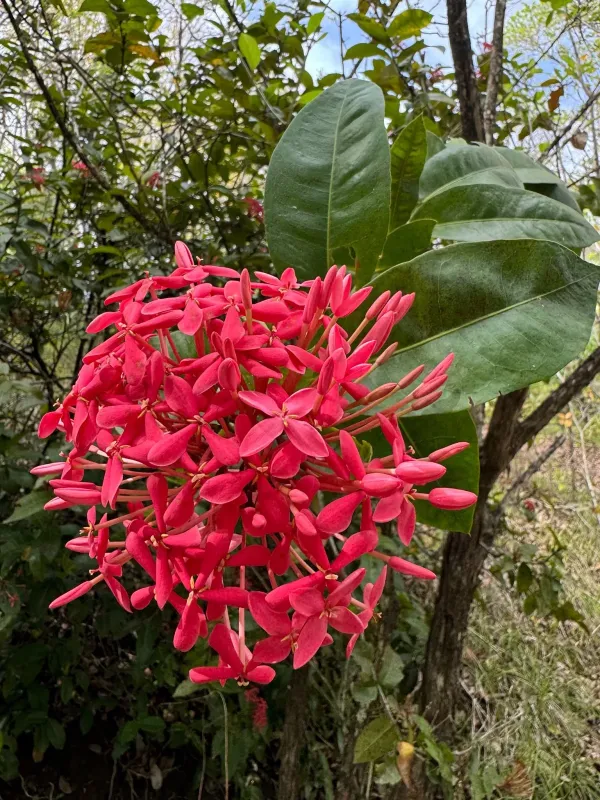
Description
Growing requirements
Ixora coccinea L., commonly known as the Flame of the Woods, is a prominent shrub belonging to the Rubiaceae family. Native to the tropical regions of Southern India and Sri Lanka, it has become a staple ornamental crop in tropical and subtropical horticulture across the globe due to its vibrant, dense flower clusters.
The plant thrives in warm, humid climates with temperatures consistently between 20°C and 28°C. It is intolerant to frost and cold winds, making it suitable for outdoor cultivation only in tropical zones or as a controlled-environment greenhouse crop in temperate regions. Constant temperature is vital for active growth.
Soil requirements for Ixora are quite specific: it demands acidic soil (pH 4.5–5.5) with excellent drainage. In alkaline soils, the plant quickly develops nutrient deficiencies, particularly iron chlorosis. Growers often use a mix of peat moss, pine bark, and perlite to maintain the necessary acidity and soil structure.
Botanically, Ixora coccinea is characterized by leathery, evergreen leaves and clusters of small, tubular flowers. The inflorescences can reach up to 10-15 cm in diameter. The plant requires high light intensity to promote heavy flowering; insufficient light levels result in sparse foliage and reduced bloom production.
Agricultural management includes regular pruning to maintain the shrub's shape and to encourage denser branching. Fertilization should be focused on acid-loving plant formulas, applied during the peak growing season. Maintaining high relative humidity is equally important for plant health and metabolic activity.
Main diseases and pests
Common pests affecting Ixora include scale insects and mealybugs, which are notorious for hiding in the crevices of stems and leaf junctions. These pests sap the plant's vitality, leading to stunted growth. Systematic treatment with horticultural oils or contact insecticides is recommended for effective control.
Spider mites represent a major challenge, especially in low-humidity conditions during the dry season. These microscopic pests cause leaves to develop a mottled appearance and eventually drop. Increasing humidity and frequent misting are effective preventative measures, while miticides are needed for outbreaks.
Fungal leaf spot diseases may develop if foliage remains wet for extended periods, especially in poor ventilation settings. These spots can cause significant defoliation if left untreated. Proper spacing between plants and irrigation at the soil level rather than the canopy help mitigate the risk of infection.
Root rot, driven by Phytophthora or Pythium species, is a lethal issue caused by overwatering or poor soil drainage. Signs include wilting despite moist soil and darkening of the root system. Fungicide applications and adjusting the irrigation schedule are necessary to save the plant from collapse.
Nutrient-related issues, primarily iron and magnesium deficiencies, manifest as yellowing of the leaf tissue while the veins remain green. Correcting the soil pH and applying chelated micronutrient sprays are standard practices to restore the deep green color and ensure consistent growth cycles.