
Fimbristylis bisumbellata
Fimbristylis bisumbellata
Description
Growing requirements
Fimbristylis bisumbellata is an annual herbaceous plant belonging to the Cyperaceae family. In agricultural science, it is typically recognized as a weed species, particularly problematic in irrigated rice cultivation and wetland environments.
The plant originates from tropical and subtropical regions across Africa, Asia, and Australia. It is highly adapted to wet environments, commonly found on sandy riverbanks, irrigation canal margins, and in paddy fields following the drawdown of water.
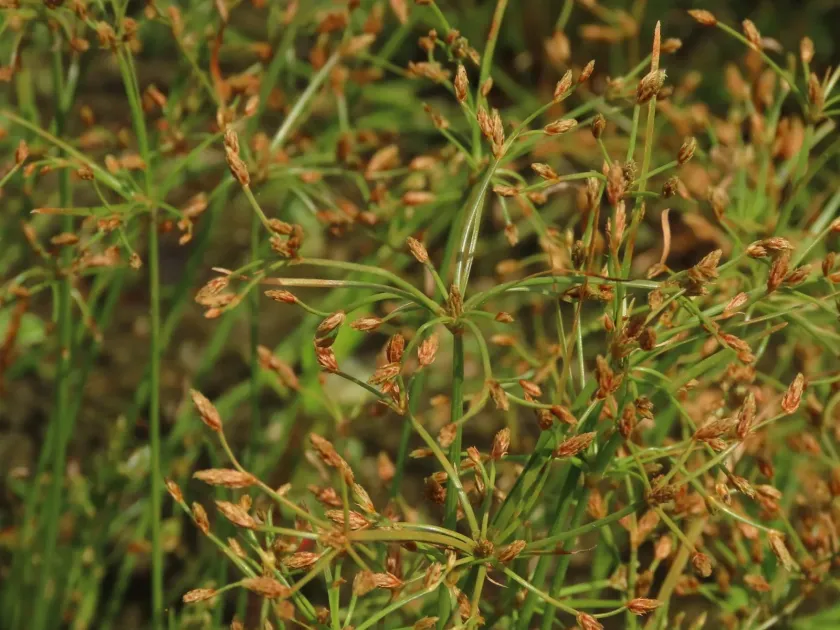
Botanically, it features slender, triangular stems and a cluster of narrow leaves at the base. Its inflorescence is a complex umbel-like structure containing numerous small spikelets, which makes it distinct within the genus Fimbristylis.
Regarding climatic requirements, the plant thrives in high humidity and warm temperatures. It is highly competitive in saturated soil conditions, where it can rapidly form dense stands that shade out the emerging seedlings of cultivated crops.
The soil preference includes alluvial, sandy, and silty soils. It is particularly successful in environments with fluctuating water levels, demonstrating remarkable resilience and the ability to complete its lifecycle quickly before soil moisture drops significantly.
Main diseases and pests
The primary threat posed by this species is its aggressive colonization of agricultural fields. A single mature plant can produce a vast quantity of seeds that remain dormant in the soil, ensuring the persistence of the weed for many years.
While not a primary host for major agricultural pathogens, Fimbristylis bisumbellata can harbor certain insects and mites that may serve as vectors for viruses. This potential for virus transmission can threaten nearby rice crops if not managed properly.
In terms of management, physical removal during the early stages of growth is essential to prevent seed rain. In modern farming, the application of post-emergence herbicides specifically targeting monocotyledonous weeds is the standard procedure.
Cultural practices, such as maintaining precise water depth in paddy fields, are highly effective in suppressing the germination of this species. Rapid canopy closure by the crop is also an important strategy to reduce light availability for the weed.
Integrated weed management remains the best approach. By combining proper land preparation, crop rotation, and periodic irrigation control, farmers can effectively lower the population density of Fimbristylis bisumbellata in their fields.