
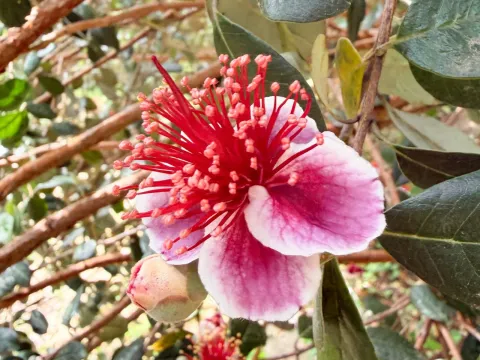
Feijoa
Feijoa
Feijoa (Acca sellowiana) is an evergreen shrub or small tree belonging to the Myrtaceae family. Originally native to the highlands of South America, specifically Brazil, Paraguay, Uruguay, and Argentina, it has become a popular agricultural crop in subtropical regions worldwide.
What the section contains

Feijoa
This plant thrives in climates with mild winters and warm summers. While it can tolerate light frosts, temperatures dropping below -10°C can damage fruit buds and young shoots. Sufficient solar radiation is essential for achieving high-quality fruit and proper vegetative development.
Feijoa adapts to a wide range of soil types, provided they are well-drained. It performs exceptionally well in fertile, slightly acidic to neutral soils. Water management is critical; while the plant requires consistent moisture during the fruiting season, it cannot withstand waterlogged conditions.
Agricultural management involves regular pruning to maintain an open canopy structure, which improves light penetration and facilitates harvest. Fertilization programs focusing on nitrogen during early growth and potassium before fruit set are recommended for maximizing commercial yields.
The plant is highly valued for its aromatic fruits, which are rich in vitamin C, fiber, and iodine compounds. Beyond commercial fruit production, feijoa serves as a versatile landscape ornamental due to its glossy foliage and striking, edible flowers.
The crop is relatively resilient but can be affected by pests such as scale insects and mealybugs. These pests suck sap from the foliage and twigs, potentially leading to stunted growth and the development of sooty mold if not treated with appropriate horticultural oils.
Fungal diseases, including leaf spot and fruit rot, may emerge in humid environments with poor air circulation. Effective management strategies include maintaining appropriate spacing between trees and ensuring the orchard floor is kept clear of debris.
The harvesting window for feijoa occurs in autumn, often continuing into early winter depending on the specific cultivar and region. Fruit maturity is signaled by a change in skin color and the development of a distinct, sweet fragrance.
Fruits should be harvested carefully to avoid bruising. Since they continue to ripen after being picked, they are often collected when they begin to fall from the tree or when slight pressure causes them to detach easily, ensuring optimal shelf life for distribution.