
Fauria crista-galli
Fauria crista-galli
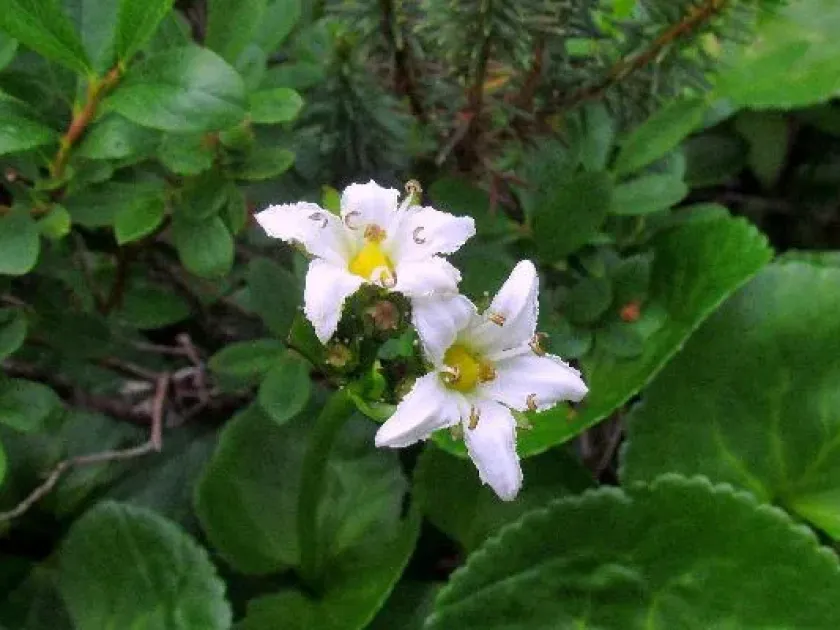
Description
Growing requirements
Fauria crista-galli, commonly known as the deer-cabbage, is a monotypic genus belonging to the Menyanthaceae family. This perennial herb is specifically adapted to boggy and marshy environments, reflecting its evolutionary niche in cold, high-moisture ecosystems.
The native distribution of this plant includes the North Pacific region, stretching from Japan and the Kuril Islands to the coastal areas of Alaska and British Columbia. It thrives in subarctic or cool temperate climates, often found in subalpine meadows and near spring-fed wetlands.
For successful growth, Fauria crista-galli requires permanently saturated soil conditions. The plant performs best in acidic, peat-rich soils that mimic its natural bog habitat, making it a challenging species for standard agricultural setups without specific hydrological controls.
From a botanical perspective, the plant is characterized by its long-petioled, heart-shaped leaves and distinct white, comb-like inflorescences. The rhizomatous growth habit allows the plant to persist through winter dormancy, regenerating vigorously when temperatures rise in spring.
In terms of practical use, the plant is primarily cultivated in ornamental water gardening and for ecological restoration projects. Its ability to thrive in wet, nutrient-poor substrates makes it an excellent candidate for stabilizing riparian zones and enhancing local biodiversity.