
Japanese silver leaf
Farfugium japonicum (L.) Kitam.
Description
Growing requirements
Farfugium japonicum, commonly known as Japanese silver leaf or leopard plant, belongs to the Asteraceae family. It is native to Japan, Korea, and Taiwan, where it grows naturally in moist, shaded environments, often found near streams or rocky terrain.
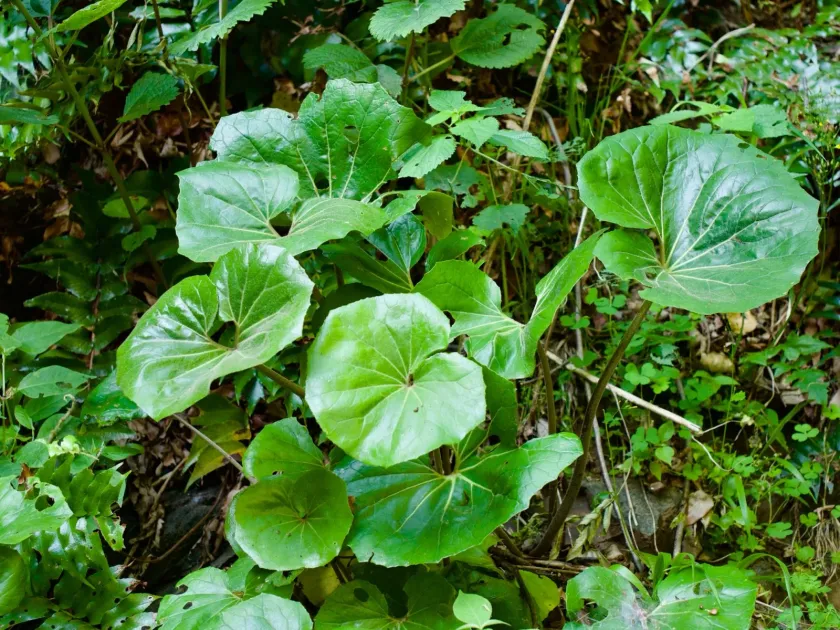
Botanically, this perennial is prized for its large, evergreen, leathery leaves that form a striking basal rosette. The leaves can be solid green, variegated, or spotted, depending on the cultivar, providing texture to garden beds throughout the growing season.
Cultivation of Farfugium requires a cool, moist microclimate. It performs best in nutrient-rich, humus-heavy soil that retains moisture effectively. Mulching is recommended to maintain stable soil temperatures and preserve the necessary moisture levels during warmer periods.
Light requirements are strict; the plant requires deep to partial shade. Direct exposure to the sun, especially during the afternoon, will cause the foliage to wilt and develop necrotic spots, severely undermining the plant's aesthetic appeal.
Its primary use is in ornamental landscaping. It serves as an excellent groundcover in shaded areas, a focal point in woodland gardens, or as a sophisticated specimen in patio containers where its bold architectural shape can be fully appreciated.
Main diseases and pests
Slugs and snails are the most significant pests for Farfugium japonicum. These gastropods are highly attracted to the succulent-like foliage and can cause severe defoliation if left uncontrolled, especially during wet and mild weather conditions.
Fungal issues, such as leaf spot or crown rot, can occur if drainage is insufficient. It is crucial to maintain good air circulation around the plants and avoid overhead watering to prevent the development of moist environments that facilitate pathogen growth.