
Farfugium hiberniflorum
Farfugium hiberniflorum (Makino) Kitam.
Description
Growing requirements
Farfugium hiberniflorum is a perennial plant species belonging to the Asteraceae family. It is distinct for its late-season flowering cycle, which uniquely occurs during the winter months, distinguishing it from most ornamental species within its genus.
Originating from the subtropical regions of Japan, specifically the Amami and Ryukyu Islands, this plant thrives in moist, shaded forest floors. It prefers a rich, well-draining soil profile that mimics its natural habitat, requiring high organic content for optimal growth.
The climate requirements for this culture are specific: it prefers stable, moderate temperatures and is highly sensitive to direct sunlight, which can cause leaf scorch. It is not frost-hardy and generally requires a sheltered environment or greenhouse conditions in cooler climates.
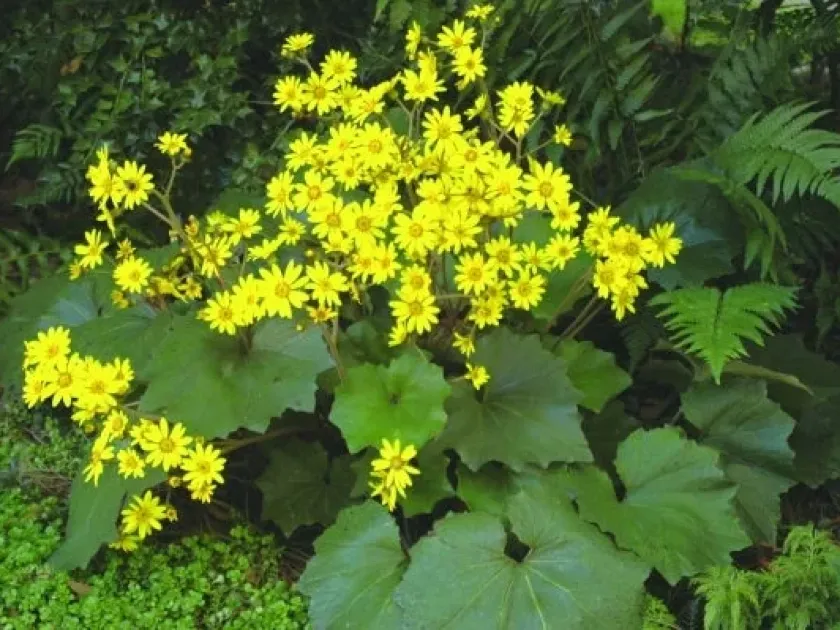
Botanically, the plant is recognized by its large, leathery, dark green leaves arranged in a basal rosette. The flower stalks emerge in winter, carrying bright yellow, daisy-like blossoms that stand out in the dormant garden landscape.
Agrotechnical management requires consistent irrigation to ensure the soil remains damp but not waterlogged. Supplemental feeding with organic compost during the spring growing season helps support the development of its robust root system and vibrant foliage.
Main diseases and pests
Slugs and snails are the primary pests affecting this species. They are particularly drawn to the thick, succulent leaves and can cause significant aesthetic damage if not managed through physical barriers or environmentally safe baiting methods.
Powdery mildew is a common fungal threat when plants are kept in environments with poor air circulation and high relative humidity. Maintaining proper spacing between plants helps prevent the development of this unsightly white coating on the leaves.
Root rot is a critical risk factor caused by improper drainage or excessive soil moisture. To prevent this, planters must ensure that the growing medium contains sufficient drainage materials such as coarse sand or perlite.
Spider mites may infest the foliage, particularly in indoor environments during the winter season when central heating reduces ambient humidity. Regular misting and monitoring are recommended to mitigate the risk of mite outbreaks.
Good sanitation practices, including the removal of dead leaves and debris from the base of the plant, are essential to reduce the likelihood of pathogen buildup. Early detection of any pest or disease is the key to maintaining a healthy specimen.