
Streptocarpus saxorum
Streptocarpus saxorum Engl.
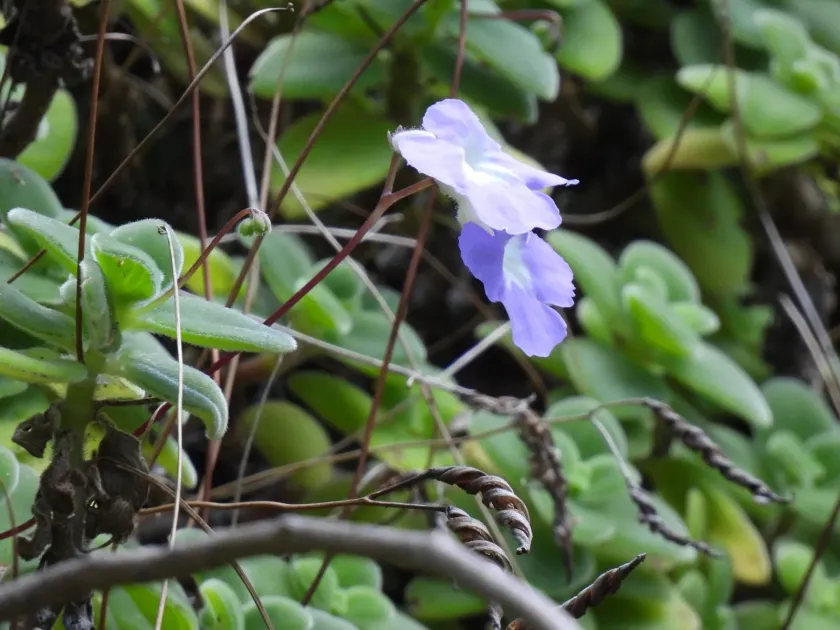
Description
Growing requirements
Streptocarpus saxorum, commonly known as the False African Violet, is a succulent-leaved trailing plant belonging to the Gesneriaceae family. Originating from the rocky outcrops of Kenya and Tanzania, this species has adapted to specific light and moisture conditions.
To thrive, the plant requires bright, indirect light. Placing it near an east-facing window is ideal, as it allows for morning sun while avoiding the harsh afternoon heat that can scorch the foliage and hinder the development of its distinctive blue-purple flowers.
The climate conditions should mimic its native habitat, maintaining a steady temperature between 18 and 24 degrees Celsius. It is sensitive to extreme cold and drafts, which can cause significant physiological stress and lead to a reduction in flowering capacity.
Regarding soil requirements, Streptocarpus saxorum demands a porous, well-draining substrate. A mix consisting of peat moss, perlite, and a small amount of charcoal is highly recommended to ensure proper aeration and to prevent the risk of root suffocation.
Watering management is critical for this crop. It is best to allow the top inch of the soil to dry out completely before providing more moisture. Avoid wetting the leaves or the crown, as moisture trapped in these areas often leads to rapid fungal decay.
Main diseases and pests
The plant is susceptible to common houseplant pests, including mealybugs and spider mites. These pests thrive in low-humidity environments, so maintaining consistent care and inspecting the underside of the leaves regularly is essential for early detection.
Fungal pathogens such as Pythium and Phytophthora represent the primary threats, usually triggered by overwatering or poor ventilation. If infection occurs, it is necessary to reduce watering frequency, improve airflow, and use specialized fungicides to rescue the specimen.