
Borneo ironwood
Eusideroxylon lauriflora
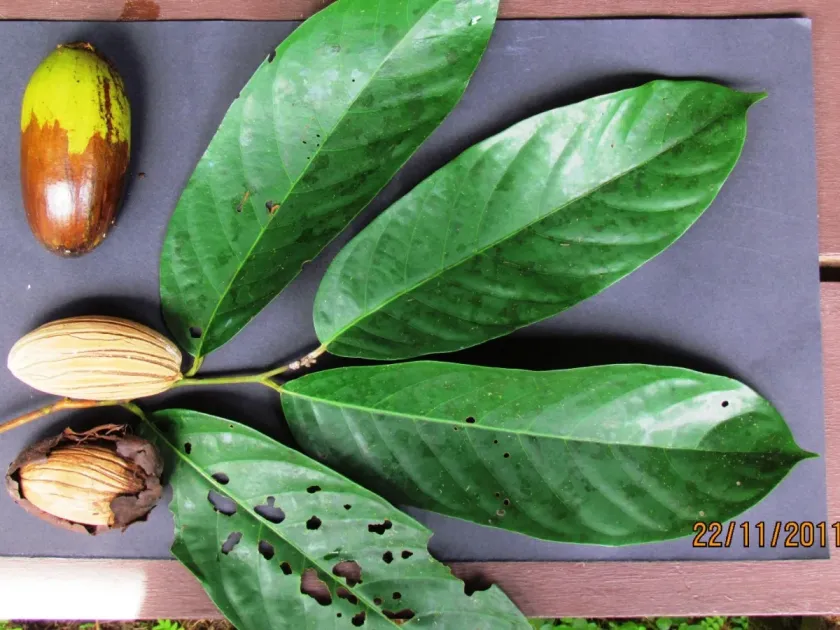
Description
Sowing dates
Propagation of Borneo ironwood is primarily conducted through seeds, which require careful handling due to their recalcitrant nature.
Seeds should be sown immediately after collection, as they lose viability rapidly when exposed to air or drying conditions.
Nursery beds must be prepared with well-draining soil mixtures enriched with organic material to support initial root development.
Germination is a slow process that requires a stable, humid environment with consistent temperatures typical of rainforest ecosystems.
Once seedlings have reached a robust stage of growth, they are transplanted into forest sites, preferably at the onset of the rainy season.
Growing requirements
This species belongs to the Lauraceae family and is native to the tropical rainforests of Southeast Asia.
Borneo ironwood demands high levels of annual rainfall and humidity, thriving in deep, fertile soils with excellent internal drainage.
The tree requires significant space for its canopy to develop and is generally intolerant of waterlogged or highly compacted soil conditions.
While mature trees are light-demanding, seedlings often benefit from partial shade in their early years to protect them from heat stress.
Given its extremely slow growth rate, the species is best suited for long-term forestry management rather than short-term agricultural cycles.
Yield
The primary yield from this species is its exceptionally dense, durable, and decay-resistant timber, famously known as ironwood.
The timber output is limited by the tree's slow maturation, which can take several decades to reach harvestable size.
Its wood is prized for its high resistance to termites, fungi, and marine borers, making it ideal for high-stress construction projects.
Commercial harvesting is restricted to selected mature trees to ensure the long-term sustainability of the population in its habitat.
Aside from timber, the tree is culturally significant to indigenous communities for various traditional construction applications.
Main diseases and pests
The species faces severe threats from habitat loss and the fragmentation of rainforests due to land-use changes.
Young plants are susceptible to fungal diseases if environmental humidity is not balanced with adequate ventilation in nurseries.
Stem borers and other specific wood-dwelling pests can compromise the quality of the timber if infestation occurs early in the life cycle.
Climate change poses a risk to its natural reproductive patterns, potentially reducing the genetic diversity of new seedling generations.
Over-exploitation and illegal logging continue to be the primary threats hindering the recovery of native Borneo ironwood populations.
Harvesting
Harvesting Borneo ironwood is a highly regulated activity due to the slow-growing nature and ecological importance of the species.
Selected logging methods are employed to target only those trees that have reached full physiological maturity and density.
Heavy machinery is often required during the extraction process because of the wood's immense density and weight.
Post-harvest management is crucial, as the wood requires specific seasoning techniques to prevent cracking or warping.
Sustainable harvesting protocols are essential to ensure that the ecological balance of the forest ecosystem is maintained for future yields.