
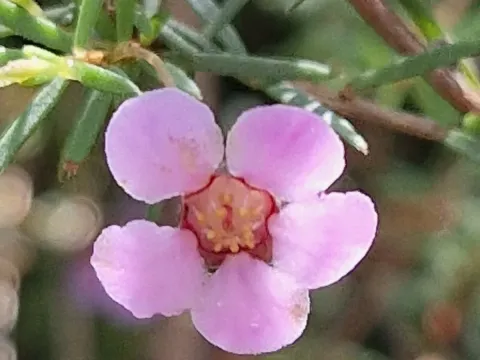
Euryomyrtus
Euryomyrtus
Euryomyrtus is a genus of evergreen shrubs belonging to the Myrtaceae family, native to the diverse and arid landscapes of Australia. These plants are prized for their resilience and ability to thrive in challenging environments.
What the section contains

Euryomyrtus
To cultivate Euryomyrtus successfully, it is essential to provide a location with full sun exposure. Adequate light is crucial for maintaining the plant's dense, compact growth habit and for stimulating the production of its characteristic flowers.
The soil must be well-drained and light, such as sandy or rocky substrates typical of its natural habitat. The plant is highly sensitive to waterlogging, which can quickly cause root damage; therefore, heavy or poorly draining soils should be avoided or modified.
Regarding climate, Euryomyrtus is well-adapted to warm, dry conditions. While it exhibits strong drought tolerance once established, consistent growth is achieved through moderate watering during the initial establishment period.
In ornamental landscaping, Euryomyrtus serves as an excellent choice for xeriscaping, rock gardens, and container planting. Its aesthetic appeal combined with low maintenance requirements makes it a preferred plant for sustainable gardens.
The most significant threat to the health of Euryomyrtus is root rot, which typically develops under conditions of excessive moisture or poor soil drainage. Maintaining a dry root zone is the primary defense strategy against this disease.
Common pests such as spider mites and scale insects may infest the shrub, particularly if the plant is stressed by extreme heat or poor air circulation. Proper plant spacing and good airflow are vital for minimizing pest pressure.
Integrated Pest Management (IPM) should be applied to manage potential outbreaks. This includes monitoring for early signs of infestation and using targeted, environmentally friendly treatments only when necessary.
Fungal leaf spots can occur during periods of high humidity. To prevent these infections, ensure that the foliage remains dry and that the planting site has sufficient air movement to allow for rapid evaporation of moisture.
Good cultural practices, such as removing dead or damaged branches and avoiding overhead irrigation, will significantly reduce the vulnerability of the plant to both pathogens and common insect pests.